ConAltriOcchi blog – 以不同的眼光看世界-博客

"C'è un solo modo di vedere le cose finché qualcuno non ci mostra come guardare con altri occhi" – "There is only one way to see things, until someone shows us how to look at them with different eyes" (Picasso) – "人观察事物的方式只有一种,除非有人让我们学会怎样以不同的眼光看世界" (毕加索)


Leave a comment

Abraham went out, not knowing where he was to go

Monica Romano

The season of Lent is, more than any other, a period in which the Word of God invites us to set out on a journey.  An  “important time”- our deputy parish priest, Fr. Paolo reminded us when we were young – many years ago, when he prepared a true and proper “agenda” for Advent and Lent for every one of us, with references to Readings for each day.  He aimed to give us a useful tool to encourage us to read the Bible more often than at other times during the liturgical year.

The journey, the vocation to which God calls us, does not always seem straightforward.  On the contrary, it requires us to take a “ leap in the dark”. I have always been struck by Abraham’s experience; he went out leaving everything and everyone behind and, as the Letter to the Hebrews points out subsequently, “by faith” he obeyed God “and went out not knowing where he was to go”. Here a fundamental aspect of the journey into faith comes into play:  trust, confidence, in God. Many of us have no doubt that God exists and believe that Jesus Christ is His Son, the Saviour who came into this world to redeem us, the firstfruits of the Resurrection which we, too, will experience.   But there is a huge leap to be made from our faith in Jesus Christ to unconditional trust and confidence in Him.

This is often the weakness in our faith: to trust God and entrust ourselves unconditionally to Him. Trust which God mapped out from the minute he became flesh as a defenceless child, who could only live if cared for and loved by Mary and Joseph. God himself was the first to make an act of trust towards men and women, first creating them and then descending into the womb of Mary, entrusting himself into the hands of a family, “an ordinary family”, which in turn placed its trust in God and pursued the extraordinary vocation to which it had been called. Not without times of darkness and uncertainty, some of which emerge from the stories in the Gospels.

There is a beautiful image which I keep in my heart, painted by the Little Sisters of Charles de Foucault (see image below). Mary is holding  Jesus Child in her arms and, instead of  “cuddling ” in the safe arms of His Mother,  He is stretching  out His arms as if to be taken by the first passer-by who wishes to welcome Him. This original “iconography” reminds me again of the idea of the trust the Lord has placed in men and women, to the point of giving His own life for them, for each one of us and all of us together. Trust that He has asked us Christians to live, we that have believed “even though we have not seen”. Acts of trust which are not just asked of us once in our lives. Later, Abraham was even asked to sacrifice his son Isaac. The meaning of which is that, in addition to the “small”, “daily”, acts of trust in God which we Christians are asked to do in our day to day lives, there can be many larger ones during our lifetime.
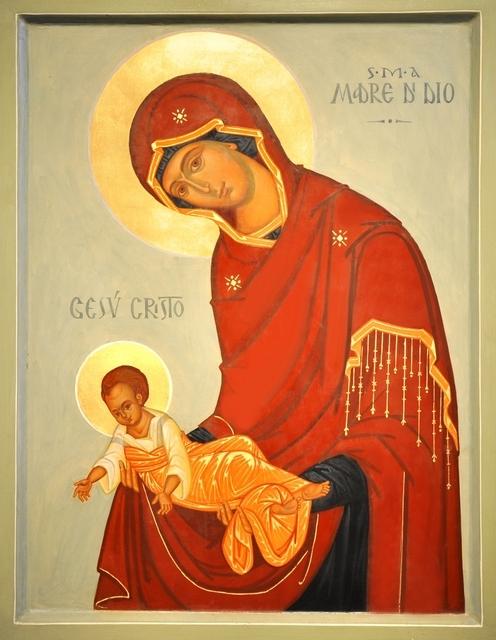
Madonna-con-Bambino

The saints are a luminous mirror of this unconditional trust in the love of the Father and followed Him always and no matter what, often persevering when the paths are dark and unclear in their souls and in their everyday lives. For me,  saints are a great consolation because they have shown us that life’s bitter moments can be overcome humanly and lived in the way the Lord asks us to do, with the aid of grace. 

But we see that the temptation of  taking “shortcuts” , the alternative to the “leap” into the dark, appears  immediately in the hearts of men and women, even those who were closest to the Lord and who gave everything, his life, for Him.  In today’s Gospel which follows the First Reading on the vocation of Abraham, the liturgy proposes the story of the Transfiguration of Jesus.  The Lord, Peter, James and John are walking “up a high mountain”. Often, when the Lord is preparing something special as in this case, the Gospel tells us that we start walking, generally under difficult, hostile situations or circumstances. Climbing the mountain, as in this case; the environment of the shepherds – the marginalized ones at the time – or the Magi from the East deceived by Herod when Jesus was born…..Once Jesus and the disciples reached their destination, Peter proposed to prepare three shelters and stay there, just them alone.  “Let us leave everything behind us, abandon this world with its hardships” Peter seems to be wanting to say. Or even, perhaps: “Let the three of us enjoy the company of the Lord”.  It has happened to me on more than one occasion to experience or to meet people who have experienced this temptation.  “Give everything up”, to say it in everyday language and perhaps in a more effective manner; “keep our faith only for us”, within our parish or Christian group,  far from the world that “does not know” or even worse “refuses” the Lord…. The Liturgy of the Word which was wisely “put together” by the Second Vatican Council tells us in these Readings that instead we must not stop but –paraphrasing the words of Jesus in the Gospel today – we must “rise and not be afraid”, like Abraham did. We must walk on our pathway and, after enjoying the light of Jesus, we must, in turn, bring it to the world, to light those dark paths on which we often find ourselves and walk along during our lives.  The Christian vocation does not mean to live in shelters by ourselves, but, as Pope Francis would say, it means opening the doors, go out, and bring Jesus to the world and let anyone who so desires come in.

May this Season of Lent, which I have always considered a propitious gift in my faith pathway, help us to light  the small lamp of our faith and our trust in God, which already have not been disappointed, with the promise of Resurrection.

Leave a comment

A light on our weakness

Thoughts on the II Sunday of Lent 

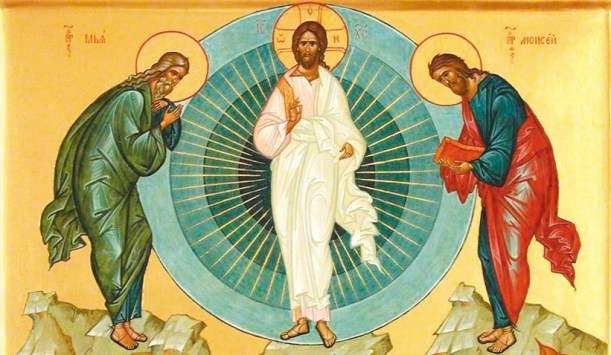
The First Reading on the second Sunday of Lent  from the Book of Genesis talks about the vocation of Abraham, called upon to set out trusting solely in the Word of God.  We, too, like Abraham are called upon to leave our land. We are at an historic time when crossing the land from the old to the new world has become vital.  Our Western land, our Europe of the cathedrals, is under siege by millions of people seeking dignity and safety. It is not rhetoric to affirm that a new world is being formed.  A Church that still wanted to stay closed up in Noah’s Ark during the deluge, i.e. an Eurocentric Church strong only in its own certainties and traditions, would simply be out of step with the times.  Even worse it would be shut off from the pain of the world.  This pain of the world is illuminated by the light of Jesus which today in Chapter 17 of the Gospel according to Matthew  unveils, for an instant, His Glory.

trasfigurazione-d0bfd180d0b5d0bed0b1d180d0b0d0b6d0b5d0bdd0b8d0b5-verklc3a4rung-transfiguration

Following in Jesus’ footsteps, all Christians are called upon to share the faith in that common territory, among all the latitudes, among all believers and non-believers, that is suffering.  «Jesus alone» in the Transfiguration, which ends with the anticipation of Easter, is only a man among other men.  But it is in that “weak” Jesus, tempted just like us by everything, lives the Glory of God. In Jesus alone and abandoned by everybody, God reveals His Glory and tells men and women that weakness is the home of God.

This is why we must pursue our Lenten journey with trust and confidence in God; life’s hardships do not diminish our Easter momentum because the Lord lights them with His glory and asks us to always know how to recognize His saving presence both in and outside us.

“It is good”, says Peter to Jesus.  Let us start anew from goodness;  even if life is not always easy, it can always be happy if we live it with Jesus, if we know how to understand ourselves and others better with a compassionate eye.

The many things we have to do, preoccupations, the  “noises of the world” often prevent us from listening to the tiny whispering sound by which God makes his presence known. (1 Kings 19,12).

To live a good and aware Christian life requires us to listen to the voice of God within and among us.  God moves our lives, he takes care of us. Nobody is excluded, nobody is left out.


Leave a comment

Ashes, Water and Dust. Thoughts on Ash Wednesday, the first day of Lent

We can all remember our grandparents washing their clothes at the riverside with ashes and water. Ashes on heads on the Wednesday marking the start of Lent, water on feet on Holy Thursday.  The carnival masks are very beautiful but they are only good for a day; then follows life with its hard face of reality, the journey along a challenging course involving all men and women and their entire being, from head to foot..

Lent takes us into the desert and as many families know when divested of their masks they find the party is over and they have to fight day after day and often enter into the desert. The desert is symbolic of Lent, an essential part of our lives.   However, as Antoine de Saint-Exupéry said so effectively: “Every desert, somewhere, hides a well, in every hardship there is the seed of an unexpected resurrection”. It is Easter the ultimate horizon of Lent.  The theologian Andrea Grillo writes: “To restore Lent as a festive initiation to the Paschal Mystery is a ‘great undertaking’, which we Roman Catholic Christians, belonging to the second generation after Vatican Council II, have found has been indicated by that great Council as one of the keys to access our ecclesial and spiritual tradition. To set in motion the symbolic mechanism of a festive journey of expectation, preparation and above all initiation to Easter.”

Pope Francis receives ashes from Cardinal Tomko during Ash Wednesday Mass at Basilica of Santa Sabina in Rome

Pope Francis receives ashes from Slovakian Cardinal Jozef Tomko during Ash Wednesday Mass at the Basilica of Santa Sabina in Rome March 5. (CNS photo/Paul Haring) (March 5, 2014) See POPE-ASHWEDNESDAY March 5, 2014.

“Convert and believe in the Gospel” or “Remember you are dust and to dust you shall return”, the priests will say as they are spreading the ashes. Faith and humility are necessary to commence the journey of conversion towards Easter;  it only needs a financial crisis for many to lose their daily bread, a disease and the joy of life will be wanting. Men and women are dust. And yet that dust, which houses the breath of the Holy Spirit, is still today the best creation of all.  The Holy Spirit bursts into our fragility and calls us to an original and ever newer identity.  We must act according to the Holy Spirit, with that fragile courage belonging to every baptised person which we see on every page of the Gospel making us new men and women every day.

The Lord, through the Prophet Joel whom we select for the First Reading on Ash Wednesday (Joel 2,16-18) asks us to gather people together, young, old, children, married couples, unmarried couples, immigrants for them to receive the invitation to  be reconciled with God, as Saint Paul reminds us in the Second Reading from the Second Letter to the Corinthians (2Cor 5,20-6,2).

In the Gospel, (Mt6,1-6.16-18) Jesus exhorts us  take the journey seriously.  God also walks and comes towards us and we welcome him with prayer, fasting and charity. These are not individual or private Lenten practices, rather they want to express our hearts which move towards God and towards all men and women, who are, from Easter onwards, our brothers and sisters.

May Lent help us to make our interior and exterior world  as the Father’s house where all men and women are brothers and sisters, and not turn it into a marketplace (Jn2,16), where everyone is an enemy and a competitor.


Leave a comment

Abramo partì, senza sapere dove andava

Monica Romano

Il tempo di Quaresima è, più di altri, un tempo in cui la Parola di Dio ci invita a metterci in cammino. Un “tempo forte”- ci ricordava da ragazzi il mio vice-parroco, Don Paolo – molti anni fa, quando preparava per ognuno di noi una vera e propria “agenda” per l’Avvento e la Quaresima, con i riferimenti alle Letture giorno per giorno. Per darci uno strumento utile e incoraggiarci ad accostarci alla Bibbia più regolarmente rispetto ad altri tempi dell’anno liturgico.

Il cammino, la vocazione alla quale Dio ci chiama, non ci appare sempre lineare, anzi a volte ci richiede quasi un “salto nel buio”. Mi ha sempre colpito l’esperienza di Abramo, che parte lasciando tutto e tutti e, come noterà successivamente la Lettera agli Ebrei, “per fede” obbedì a Dio e “partì senza sapere dove andava”. Qui entra il gioco un aspetto fondamentale nel cammino di fede: la fiducia in Dio. Molti di noi non mettono in dubbio l’esistenza di Dio e credono che Gesù Cristo sia Suo Figlio, il Salvatore, venuto nel mondo per riscattarci, come primizia della Resurrezione che sperimenteremo anche noi. Ma dalla fede in Gesù Cristo alla fiducia incondizionata vi è appunto un salto molto grande da fare. Spesso questa è la debolezza della nostra fede – fidarsi (e affidarsi) incondizionatamente di Dio. Fiducia che Dio ci ha tracciato dal momento in cui si è incarnato in un bambino indifeso, che poteva vivere solo se accudito e amato da Maria e Giuseppe. Dio ha fatto Lui stesso per primo un atto di fiducia nell’uomo, prima creandolo e dopo scendendo nel grembo di Maria e affidandosi a una famiglia diciamo “come tutte le altre”, che si è a sua volta fidata di Dio e ha portato avanti una vocazione straordinaria alla quale era stata chiamata. Non senza momenti di buio e di incertezza, alcuni dei quali emergono anche dai racconti del Vangelo. C’è un’immagine molto bella che porto nel cuore, dipinta dalle Piccole Sorelle di Charles de Foucault (vedi immagine sotto). Maria che tiene in braccio il piccolo Gesù, che invece di starsene “accovacciato” tra le braccia rassicuranti della mamma, le tende come per farsi prendere dal passante che desidera accoglierlo. Questa “iconografia” originale mi richiama di nuovo l’idea della fiducia, che il Signore ha riposto nell’uomo, fino a donare la sua vita per lui, ciascuno di noi e tutti insieme. E che ha richiesto a noi cristiani, che crediamo “pur non avendo visto”. Atti di fiducia che ci vengono richiesti non una sola volta nella vita. Ad Abramo successivamente verrà chiesto addirittura di sacrificare il figlio Isacco. A significare che, in aggiunta ai “piccoli”, “quotidiani”, atti di fiducia cui i cristiani sono chiamati a rispondere nella vita ordinaria, ve ne possono essere di molto, molto grandi, nel corso della vita.

Madonna-con-Bambino

I santi sono uno specchio luminoso di questa fiducia incondizionata nell’amore del Padre e hanno seguito Gesù sempre e comunque, molte volte attraversando percorsi bui, nell’anima e nella vita concreta di tutti i giorni. Per me i santi sono una grande consolazione, perché nelle amarezze della vita mostrano che esse si possono superare umanamente o vivere secondo quanto il Signore ci chiede, con l’aiuto della grazia.

Ma vediamo che già da subito, la tentazione alla “scorciatoia”, all’alternativa alla “salita” nel buio, si affaccia nel cuore dell’uomo, perfino in chi era più vicino al Signore e ha poi dato tutto, la vita, per Lui. Nel Vangelo di oggi che segue la Prima Lettura sulla vocazione di Abramo, la liturgia propone il racconto della Trasfigurazione di Gesù. Camminano il Signore, Pietro, Giacomo e Giovanni, “su un alto monte”. Spesso, quando il Signore prepara qualcosa di speciale come in questo caso, il Vangelo racconta che ci si mette in cammino e in condizioni o circostanze generalmente ostili, difficili. La salita sul monte, come in questo caso; il contesto dei pastori – i reietti della società di allora – o i Magi ingannati da Erode, quando nasce Gesù… Una volta giunti a destinazione, Pietro propone di preparare tre capanne e rimanere lì, loro soli. “Lasciamoci tutto alle spalle, abbandoniamo il mondo con le sue amarezze”, praticamente a me sembra voglia dire Pietro. Forse, anche: “Godiamoci noi tre la compagnia del Signore”. Mi è capitato molte volte di sperimentare o incontrare persone che hanno vissuto questa tentazione. “Mollare tutto”, per dirla con un linguaggio più vicino a noi e forse più efficace; “tenerci stretta” la fede, nel nostro gruppo parrocchiale, nel nostro movimento, lontani dal mondo che “non conosce” o peggio ancora “rifiuta” il Signore…. La liturgia della Parola che saggiamente è stata “assemblata” con il Concilio ci dice con queste Letture che invece non bisogna fermarsi ma – come Abramo e parafrasando le parole di Gesù nel Vangelo di oggi, “alzarci e non avere paura” -, camminare, e dopo aver goduto della luce di Gesù, dobbiamo a nostra volta portarla nel mondo, per illuminare quei cammini bui che molte volte ci ritroviamo a percorrere nelle nostre vite. Non è una vocazione cristiana vivere in una capanna tra di noi, ma – direbbe ancora Papa Francesco – aprire le sue porte,  uscire per portare Gesù al mondo e lasciar entrare chi lo desidera.

Che questo tempo quaresimale, che ho sempre considerato un dono propizio nel cammino di fede, possa aiutarci ad alimentare sempre di più la piccola lampada della nostra fede e della nostra fiducia in Dio, che già non è stata delusa, , con la promessa della Resurrezione.


Leave a comment

Una luce sulla nostra debolezza

Riflessione nella II Domenica di Quaresima 

La Prima Lettura della seconda Domenica di Quaresima tratta dal Libro della Genesi ci presenta la vocazione di Abramo, chiamato a partire fidandosi unicamente della Parola di Dio. Anche noi come Abramo siamo chiamati ad uscire dalla nostra terra. Siamo in un momento storico in cui attraversare la terra dal vecchio al nuovo mondo è divenuto un fatto necessario. La nostra terra occidentale, la nostra Europa delle cattedrali, sono ormai assediate da milioni di persone in cerca di dignità e sicurezza. Non è retorica affermare che un nuovo mondo si sta formando. Una Chiesa che ancora volesse rimanere rinchiusa nell’Arca di Noè durante il diluvio, cioè una Chiesa eurocentrica forte soltanto delle proprie sicurezze e tradizioni, sarebbe semplicemente fuori dalla storia. Ancora di più sarebbe fuori dal dolore del mondo. Questo dolore del mondo è illuminato dalla luce di Gesù che oggi nel vangelo di Matteo al capitolo 17 svela per un istante la Sua Gloria.

trasfigurazione-d0bfd180d0b5d0bed0b1d180d0b0d0b6d0b5d0bdd0b8d0b5-verklc3a4rung-transfiguration.jpg

Sull’esempio di Gesù, ogni cristiano è chiamato a condividere la fede in quel terra comune, tra tutte le latitudini, anche tra credenti e non credenti che è la sofferenza. Il «Gesù solo» della Trasfigurazione, terminata l’anticipazione della Pasqua, è solo un uomo tra gli uomini.  Ecco però che nel Gesù debole, tentato come noi in ogni cosa noi, abita la Gloria di Dio.  In Gesù solo e abbandonato da tutti, Dio rivela la Sua Gloria e dice agli uomini che la debolezza è la casa di Dio.

Per questo con fiducia dobbiamo percorrere il nostro cammino quaresimale; le amarezze della vita non diminuiscono il nostro slancio pasquale, perché il Signore le illumina con la Sua Gloria e chiede a noi di saper sempre scorgere dentro di noi e fuori di noi la Sua presenza salvatrice.

“E’ bello”, dice Pietro a Gesù. Ripartire dalla bellezza; la vita se sempre non è facile, sempre può essere felice se la viviamo con Gesù, se sappiamo meglio comprendere con uno sguardo compassionevole, noi stessi e gli altri.

Le molte cose da fare, le preoccupazioni, i “rumori del mondo” spesso ci impediscono di ascoltare il sussurro di una brezza leggera attraverso il quale Dio si fa presente (1 Re 19,12).

Vivere una vita cristiana bella e consapevole richiede l’ascolto della voce di Dio dentro di noi e tra noi. Dio agisce nostra vita, si prende cura di noi. Nessuno è escluso, nessuno è abbandonato.


Leave a comment

中国孩子唱“加油耶稣”

趁意大利总统塞尔焦•马塔雷拉这几天在中国国事访问之际,一群中国小学生们演唱了意大利电视节目“金币”的一首歌曲,名叫“加油耶稣”。

有如意大利总统府网站和北京意大利大使馆推文上所写的,马塔雷拉总统会晤了重庆市人民小学的师生们,重庆位于中国中南部,有约三千三百万居民。在总统访问学校期间,一群孩子迎接他,并唱着“加油耶稣”,这是“金币”节目2010年十月播放的第五十三年度歌曲比赛中的一首。这首歌由西满•德亚那主唱,并如所有歌曲比赛一样,由博洛尼亚安多尼儿童合唱团伴唱。根据网路快速搜索,透过网路上的一个视频,“加油耶稣”这首歌在中国受到热烈欢迎,是当年安多尼儿童合唱团在维罗纳圣费尔莫教堂表演后不久,为庆祝同年的圣诞节放在网路上的。如“天主教家庭”杂志记载说,这个有中文字幕歌曲的视频(字面标题为“加油耶稣”)在中国创下了1.5亿人次点击率。独唱者是一位四岁的小女孩,名叫弗朗西斯卡。在这帖子的底部有这首歌的意大利文和中文的歌词。

“加油耶稣”这首歌表示孩子知道他们周围的邪恶,并知道他们能面对邪恶的局限。孩子也显示出在看见其他人,也就是成年人,不快乐时的忧虑,并有意协助他们。但这首歌的重点是论及耶稣,不光是因为孩子看到耶稣为世界的邪恶忧虑,而想安慰祂。也因为耶稣之爱能胜过邪恶,使世界变得更美,而世界因美丽而被拯救。就如这段有意义的歌词写说:“我想有了爱就能做许多事情。比如安慰一下耶稣。加油耶稣,请不要担忧,如果从天上看这世界很丑陋,因着你的爱仍可怀着梦想,并在地上拥有天堂的一隅”。

这首歌是海洋中的一小滴水,那里有关信仰和基督的标记,在我们西方社会中正逐渐消失,甚至在曾被认为是基本的环境内,例如在儿童与青少年的教育和休闲的时刻。比方说在罗马圣诞节时很心酸地只看见一般有关“节日快乐”的标志,而带有宗教性的图像或描述的贺卡,必须去天主教书局才能找到。一般尚能看见圣诞老人和雪人,有时也能看见天使(然而不必需有基督信仰的内涵,或是因为时过境迁,丧失了一些这种内涵),但是几乎再也看不到白冷城的马棚和圣婴耶稣…

“加油耶稣”这首歌也是中国大地里的一滴水,因为在中国天主教信仰继续成长,不管有什么困难、黑白划分或矛盾…歌词承认耶稣“使人怀着梦想”是很美丽的。如果父母理解耶稣是年轻人的意愿、渴望和不安的答案,许多不幸,许多世界的邪恶一定不会存在。在大中国也是一样,突飞猛进和令人惊讶的经济与社会发展陪伴着一个使人警惕的精神与道德价值的空虚,尤其是在青年世代当中。一个美丽、平静、在日常生活上及自己每天的职责中经验过的信仰,一个指向耶稣本人的信仰,那个使我们内心自由和把近人放在中心的耶稣的信仰,能否为大中国成为一个“更加往前迈进的步伐”呢?耶稣这个人能否吸引中国青年,使他们的生活变得更美丽、更走向一个经济和社会富庶的幸福生活,一个更有人性、更少个人主义和在内心与精神上更加丰富的幸福生活呢?

在安多尼儿童合唱团最近两个中国巡回演出之一的游记上我们可以读到:“听见观众向“加油耶稣”喝彩,或是安静地聆听“李奥内修士的降福”,再想起那些歌词的那么普世性的讯息,使我们留下深刻的印象。我们唱了意大利文、英文、中文、西班牙文、法文和拉丁文的歌,结果都能听懂,一切都适合孩子”。那些比较留意教宗新闻的人,必会记得教宗访问一个罗马本堂的时候,初领圣体的孩子们曾向他献唱“李奥内修士的降福”。

这不是第一次在中国有一个合唱团唱了“加油耶稣”。我们在网路上发现杨国庆老师指挥的青岛爱乐少年合唱团也唱过这首歌,另外还唱了一首(“白冷城有恒星”)。但是我们祈祷和期望,在这么重要的官方机会上选择了这首歌,是根据教宗方济各的努力和意图,代表教会和中国之间建立桥梁的另一个小标记。

歌曲 (意大利文 和 中文)

Forza Gesù

Ogni sera quando prego nel lettino

Penso a quello che si vede da lassù,

Tutto il male che viviamo sulla terra,

Ogni lacrima che scende sale su.

Tu mi dici cosa mai può fare un bimbo,

Come può contare piccolo com’è.

Con l’amore penso si può fare tanto

Per esempio consolare un po’ Gesù.

Forza Gesù, non ti preoccupare

Se il mondo non è bello visto da lassù,

Con il tuo amore si può sognare

E avere un po’ di paradiso

Quaggiù.

Avere un po’ di paradiso

Anche quaggiù,

Avere un po’ di paradiso.

Quando dico la preghiera del mattino

Prego per la sorellina ed il papà,

Per la mamma che mi sta vicino

Mi sorride, mi dà gran felicità.

Ma poi penso a tutti quei bambini

Che non sono fortunati come me,

Senza amore si cresce con fatica

Che dolore tutto questo per Gesù.

Forza Gesù, non ti preoccupare

Se il mondo non è bello visto da lassù,

Con il tuo amore si può sognare

E avere un po’ di paradiso quaggiù.

E’ importante la preghiera di un bambino,

E’ importante perché nel suo cuore ha

La bellezza che al Signore dà un sorriso,

La bellezza che il mondo salverà.

Forza Gesù, non ti preoccupare

Se il mondo non è bello visto da lassù,

Con il tuo amore si può sognare

E avere un po’ di paradiso

Quaggiù.

Avere un po’ di paradiso

Anche quaggiù,

Avere un po’ di paradiso

Anche quaggiù!


加油耶稣

每夜我都在小床上默默回顾

经历那位多少的祝福

也许地上难免仍有许多痛苦

每滴眼泪他都为我们细数

人说小孩去做不可能会成功

怎能指望小孩去完成圣工

我想有爱的话就有能力传送

比如安慰耶稣让他更轻松

加油耶稣 请你不要担忧

即使从天上看这世界很陈腐

有你的眷顾 梦拉开帷幕

天堂的一角可以落户 此处

天堂的一角可以落户 地上此处

天堂的一角可以落户

清晨我的祷告向他心意倾吐

为妹妹还有我地上的生父

陪伴妈妈一同祈祷很幸福

她的微笑让我心里很满足

想起许多小朋友在世界各处

他们并非和我一样的幸福

没人关爱的他们成长艰苦

这对耶稣来说他也很伤楚

加油耶稣 请你不要担忧

即使从天上看这世界很陈腐

有你的眷顾 梦拉开帷幕

天堂的一角可以落户 此处

即便一个小孩祷告也很重要

因为他的心中有一份美好

这份美好传递给主一个微笑

这份美好可以拯救这世道

加油耶稣 请你不要担忧

即使从天上看这世界很陈腐

有你的眷顾 梦拉开帷幕

天堂的一角可以落户 此处

天堂的一角可以落户 地上此处

天堂的一角可以落户 就在此处


Leave a comment

I bambini cinesi cantano “Forza Gesù”

In occasione della Visita di Stato del Presidente della Repubblica Italiana Sergio Mattarella in Cina in questi giorni, un gruppo di studenti cinesi di scuola elementare si è esibito con una canzone in italiano intitolata “Forza Gesù” dello Zecchino d’Oro.

Come si legge sul sito del Quirinale e riportato dall’account twitter dell’Ambasciata d’Italia a Pechino, il Presidente Mattarella ha incontrato docenti e alunni della Scuola Elementare del Popolo di Chongqing, città che si trova nella parte centro-meridionale della Cina, con quasi 33 milioni di abitanti. Durante la visita alla scuola, un gruppo di bambini ha accolto il Presidente cantando “Forza Gesù”, una canzone in gara della 53ma edizione dello Zecchino d’Oro, che si è svolta a novembre del 2010. Il brano era cantato da Simone Deiana e come tutte le canzoni della performance canora era accompagnato dal Piccolo Coro dell’Antoniano di Bologna. Secondo una rapida ricerca su internet, la canzone è diventata popolare in Cina tramite un video postato su internet relativo a un’esibizione di poco successiva del Coro dell’Antoniano nella Basilica di San Fermo a Verona, in occasione del Natale dello stesso anno. Come riporta Famiglia Cristiana, il video con la canzone sottotitolata in cinese (dal titolo letterale “加油耶稣”) ha registrato un milione e mezzo di visualizzazioni in Cina. La voce solista era quella di una bambina di quattro anni, Francesca. In fondo al post i testi della canzone in italiano e in cinese.

La canzone mostra come i bambini siano consapevoli del male che li circonda e dei loro limiti nel poterlo affrontare. Appare anche la preoccupazione che i bambini hanno quando vedono che gli altri, gli adulti, sono infelici e il desiderio di fare qualcosa per loro. Ma il cuore della canzone è il riferimento a Gesù e non solo il fatto che il bambino veda la preoccupazione di Gesù per il male del mondo e vorrebbe consolarLo. Ma il fatto che l’amore di Gesù può superare il male e rendere il mondo più bello, e la bellezza salvare il mondo. Così un passaggio significativo del testo: “Con l’amore penso si può fare tanto. Per esempio consolare un po’ Gesù. Forza Gesù, non ti preoccupare se il mondo non è bello visto da lassù, con il Tuo amore si può sognare e avere un po’ di Paradiso quaggiù”.

Questa canzone è una piccola goccia in un oceano dove i riferimenti alla fede e ai simboli cristiani vanno scomparendo nelle nostre società occidentali, anche nei contesti dove un tempo erano considerati fondamentali, come ad esempio per l’educazione e i momenti di svago di bambini e ragazzi. A Roma, ad esempio, è molto triste in tempo di Natale vedere solo riferimenti generici alle “buone feste” e dover andare solo nelle librerie cattoliche per trovare biglietti augurali con immagini o rappresentazioni di carattere religioso. Si trovano Babbo Natale e il pupazzo di neve, a volte gli angeli (che però non hanno necessariamente, o nel tempo hanno visto un po’ perdersi, una connotazione cristiana), ma quasi mai la capanna di Betlemme con Gesù Bambino…

Questa canzone è anche una goccia anche nell’immensa Cina, dove la fede cristiana cresce, anche se con difficoltà, chiaroscuri e contraddizioni…Ed è bello che il testo riconosca che Gesù “faccia sognare”. Se i genitori capissero che Gesù è la risposta ai desideri, alle aspirazioni, e alle inquietudini dei giovani, tante infelicità, tanti mali del mondo certamente non esisterebbero. Anche nella grande Cina, dove al galoppante e sorprendente progresso economico e sociale si accompagna un allarmante vuoto di valori spirituali e morali, soprattutto tra le giovani generazioni. Può una fede bella, serena, vissuta nella vita di tutti i giorni, nei propri doveri quotidiani nella società, una fede nella persona di Gesù, che ci rende liberi interiormente e mette il prossimo al centro, “essere una marcia” in più per la grande Cina? Può questa figura di Gesù attrarre i giovani cinesi e rendere la loro vita più bella, più orientata a un benessere economico e sociale che sia più umano, meno individualista e più ricco interiormente e spiritualmente?

Nel diario di viaggio relativo a una delle due recenti tournée cinesi del Piccolo Coro dell’Antoniano leggiamo: “Sentire l’ovazione per ‘Forza Gesù’ o l’ascolto in silenzio della ‘Benedizione a Frate Leone’, pensando al messaggio così universale di quei testi, fa impressione. Abbiamo cantato in Italiano, in Inglese, in Cinese, in Spagnolo, in Francese, in Latino e alla fine tutto era comprensibile e tutto era a misura di bambino”. Qualcuno che segue il Papa più attentamente ricorderà che in occasione della sua visita in una parrocchia romana, i bambini della Prima Comunione avevano cantato per lui la Benedizione di Frate Leone.

Non è la prima volta che “Forza Gesù” è stata cantata in Cina. In internet abbiamo trovato che il piccolo coro filarmonico di Qingdao diretto da maestro Yang Guoqing l’aveva cantata, insieme a un altro testo (“Una stella a Betlemme”). Preghiamo e speriamo però che la scelta di questo testo in un’occasione ufficiale così importante sia un altro piccolo segno di un ponte che si costruisce, tra la Chiesa e la Cina, secondo gli sforzi e le intenzioni di Papa Francesco.


TESTO DELLA CANZONE (ITA e CIN)

Forza Gesù

Ogni sera quando prego nel lettino Penso a quello che si vede da lassù, Tutto il male che viviamo sulla terra, Ogni lacrima che scende sale su.

Tu mi dici cosa mai può fare un bimbo, Come può contare piccolo com’è.
Con l’amore penso si può fare tanto Per esempio consolare un po’ Gesù.

Forza Gesù, non ti preoccupare
Se il mondo non è bello visto da lassù, Con il tuo amore si può sognare
E avere un po’ di paradiso
Quaggiù.
Avere un po’ di paradiso
Anche quaggiù,
Avere un po’ di paradiso.

Quando dico la preghiera del mattino Prego per la sorellina ed il papà,
Per la mamma che mi sta vicino
Mi sorride, mi dà gran felicità.

Ma poi penso a tutti quei bambini Che non sono fortunati come me, Senza amore si cresce con fatica Che dolore tutto questo per Gesù.

Forza Gesù, non ti preoccupare
Se il mondo non è bello visto da lassù, Con il tuo amore si può sognare
E avere un po’ di paradiso quaggiù.

E’ importante la preghiera di un bambino, E’ importante perché nel suo cuore ha
La bellezza che al Signore dà un sorriso, La bellezza che il mondo salverà.

Forza Gesù, non ti preoccupare
Se il mondo non è bello visto da lassù, Con il tuo amore si può sognare
E avere un po’ di paradiso
Quaggiù.
Avere un po’ di paradiso
Anche quaggiù,
Avere un po’ di paradiso
Anche quaggiù!

         加油耶稣

每夜我都在小床上默默回顾经历那位多少的祝福
也许地上难免仍有许多痛苦
每滴眼泪他都为我们细数
人说小孩去做不可能会成功
怎能指望小孩去完成圣工
我想有爱的话就有能力传送
比如安慰耶稣让他更轻松
加油耶稣 请你不要担忧
  即使从天上看这世界很陈腐
  有你的眷顾 梦拉开帷幕
  天堂的一角可以落户 此处
天堂的一角可以落户 地上此处
天堂的一角可以落户
清晨我的祷告向他心意倾吐
为妹妹还有我地上的生父
陪伴妈妈一同祈祷很幸福
她的微笑让我心里很满足
想起许多小朋友在世界各处
他们并非和我一样的幸福
没人关爱的他们成长艰苦
这对耶稣来说他也很伤楚
加油耶稣 请你不要担忧
  即使从天上看这世界很陈腐
  有你的眷顾 梦拉开帷幕
  天堂的一角可以落户 此处
即便一个小孩祷告也很重要
因为他的心中有一份美好
这份美好传递给主一个微笑
这份美好可以拯救这世道
加油耶稣 请你不要担忧
  即使从天上看这世界很陈腐
  有你的眷顾 梦拉开帷幕
  天堂的一角可以落户 此处
天堂的一角可以落户 地上此处
天堂的一角可以落户 就在此处


Leave a comment

Pope Francis, true witness of the Joy of the Gospel

22nd February, the Church is celebrating the Feast of the Chair of St. Peter. The Chair marks the primatial role of Peter in the Apostolic College  when Jesus assigned him the task of  “feeding” his flock. Today, on this Chair sits Pope Francis and it is shining with a special light, allowing us to catch sight of the holy Spirit at work in the Church.

Evangelii Gaudium, Laudato Si’ e Amoris Laetitia.   Joy, Praise, Delight. The very names of the documents of the Pope’s teaching  enable us to understand clearly the faith in God and trust in men which live in Francis’s priestly heart.  Biblical joy erupts powerfully:  “I bring you tidings of great joy, which shall be to all people.” A joy which came into the world and is not reserved only for an exclusive club.

Those who speak always and only of  “doctrine” are sad Christians and cannot be good witnesses of the Gospel which, in regard to witnesses, speaks thus of John:” the disciple beloved of Jesus”. The disciples must be taught first and foremost with love, by loving them, welcoming them just as they are,  walking along a stretch of road with them, “infecting them” with a coherent testimony of Christian life.

If we don’t: “stop seeking those personal or communal niches which enable us to maintain a distance from the issue of human drama”(AL) we will be unable to understand the “drama” of the Kerygma;  the Kerygma isn’t doctrine but drama. Announcing the Gospel without personal involvement is not only a useless illusion, it is also counterproductive.  Without the odour of his sheep, the Shepherd is no longer a shepherd and becomes a wolf, smelling only of incense and ink and no longer has the shepherd’s dirty garments but robes of Constantinian memory and so the sheep flee from Him.

«No one has seen God at any time but the one and only Son who is in the bosom of the Father, He hath declared him». Unless he is the God who makes himself known through the Word Incarnate of the Son of Man, this God is not the Christian God but a mere concept or even an ideological instrument who says nothing to our hearts.  God’s people need Shepherds who warm their hearts not Instructions for Use. After all,  warm hearts are like clay, more malleable and gradually masterpieces emerge; hearts full of instructions for use are beautiful on the outside but do not beat within and cannot be shaped in any way whatsoever.

At times not only do we not want to make the effort to get to know the God of Jesus Christ, but often not even Man; man is a mixture of mud and Spirit. The mud is an important thing; it is the sweat we see every day in our streets;  it is the blood that so many families spill to reach the end of the month with dignity; it is the “marvellous complexity” of life. The Spirit needs this mud, the Church needs it, we all need it; in order never to forget that All is Grace.

“But as many as received him, to them gave he the power to become the sons of God”.  In a certain sense, we are not born Sons of God but become them; we become them by welcoming Jesus and imitating his life of love, which are the beatitudes.  We also gradually become a family; and when we are unable to for many reasons, the people remain, forever, the image and likeness of God.

Often we waste too much energy fighting evil; “The light shines in the darkness and the darkness has not overcome it”. To receive the love of God and then manifest it immediately to those we meet, simply, with joy and unconditionally, like a secret of the heart. To love unconditionally.  Many times in the countryside, we have seen the light expanding gradually at dawn and the darkness fleeing from the sunlight. It is only light which overcomes the darkness, because it overpowers it, the law can sanction it but no more than that.

The Magisterium of Pope Francis is a “perilous” light; it is enough to go to a parish and talk to the people to experience how people feel respected, loved and encouraged by His words and His example.  We can almost feel the fatherhood and motherhood of the Church physically.

A testimony, that of Pope Francis, of life, fidelity to the Gospel and to the Tradition of the Church (not to the precepts of men). A faith which is coherent with honesty, sobriety, justice and charity and which knows how to transmit the joy of meeting the Resurrected Christ to the new generations.

The Spirit summons us to an original and ever new identity to which we must abandon ourselves with faith.  The Spirit tells us that Jesus Christ isn’t the guardian of the fort,  he’s not a point of reference of the past, he is not a footrest for every egotism, even ecclesial, but a guarantee for the future.

We know very well that there is no future without memory of the past. Our memory, however, cannot exist of professions of faith proclaimed with a sword in hand, with the tendency to exclude the weakest. The unity of the Church cannot be maintained by a criterion of egotism and the desire to raise barriers, by widening the “the walls of Jericho” even more.

The language of Christianity is a universal language; it is a language of unity but not uniformity; The Spirit teaches us to speak this universal language every day of our lives.


Leave a comment

There are no enemies

Often our system, in order to continue standing, has to identify an enemy, it has to create one.  This is also true in children’s education.  Many of us in Italy will remember when our grandparents used the term “Austrian” in a derogatory manner: if you don’t behave properly I’ll call the Austrians, they used to say. Later we referred to “the Communists” and today, perhaps, the “Muslims.

One of the first teachings of the Gospel is that of the idea of the enemy: there are no enemies, there are men.  Even the Church has enemies – we have been taught – and therefore we must defend it from relativism, subjectivism, laicism etcetera, but Jesus never defended himself; and similarly neither did Peter and Paul. There is an entire history of enemies we have fought against while evil was in our midst: power, money, fear of losing our dominant position.

Thus, when Jesus says “«whosoever smiteth thee on thy right cheek, turn to him the other also»”, he is telling us to go beyond the enemy.  In the Gospel according to St. John, Jesus was slapped but he rendered it ineffective: “if I have spoken evil, bear witness of the evil: but if well, why smitest thou me?”

Jesus is asking us not to return violence for violence otherwise this will grow and turn into an interminable crescendo.

The logic of offering the other cheek, being stripped of one’s garments and dragged before the tribunal means recognizing violence, giving it a name and  “fighting it” like the sun conquers  the darkness which is gradually overcome by the expanding light.

We must begin to live this change by modifying the private spaces of our responsibility. Only men of the Beatitudes can build peace and integrate naturally into the great peace processes of history.  The powerful, the privileged, the lobbies will always be foreign bodies in the peace process and become, almost without realizing it, allies of war.

When I want to qualify nonviolence, I say justice, respect of diversity, peace, the common good.  I say the Beatitudes, words which give multiple names to this single truth of which Jesus was the first witness. Jesus is the witness of nonviolence, this nonviolence of the many names which are the beatitudes.

When someone has authority, a company, a position of leadership, or when a country owns resources, they should not defend them by the sword. Jesus said to Pilate: if my kingdom were of this world, my servants would fight. To fight with the sword is to kill, it is the violence which creates only defeats and no victors. In fact, our history is a river of blood spilt in the name of the principle that without a sword a kingdom cannot go on existing.  This is why we are always at war. «Put your sword back in its  place» said Jesus to Peter, otherwise right will always be with the strongest, the most violent, the cruellest and the best armed.

We must go back to the radical teaching of the Gospel, as St. Paul reminds us in his letter to the Corinthians.  The Corinthians criticized  Paul for his simplicity in announcing the Gospel not at their level of knowledge and culture. Paul answered by comparing the announcement of the Gospel to a building: the builders will be judged by whether they have placed Jesus Christ as the cornerstone,  not by their highly cultural discourses but empty of spiritual content. Let us make the crucifix the foundation of our life and not an aggressive tool of civil religion.


Leave a comment

11 Febbraio 2013 ; Benedetto XVI apre lo spazio allo Spirito che ci donerà Francesco

Oggi l’11 Febbraio di quattro anni fa abbiamo accompagnato papa Benedetto XVI , nel giorno della sua rinuncia nella salita verso Gerusalemme e alla nostra  mente e al nostro cuore apparve subito l’ora dell’innalzamento sulla Croce; l’ora è vicina,dirà Gesù. Per quest’ora noi tutti  siamo venuti. Un’ora che Gesù ha desiderata, ma nello stesso tempo, un’ora carica di turbamento:“Ora l’anima mia è turbata”dirà Gesù nel giardino della sua agoniae anche il mio corpo è turbato disse in quel giorno  il papa.

Come è consolante per me, questa confessione di Gesù, questa confessione del papa,  una confessione di turbamento, dell’anima e del corpo. Come ci accompagna e ci dà forza nei momenti in cui davanti a tanti drammi della vita, e soprattutto davanti al dramma della morte, pure noi, come lui, sentiamo l’anima e il corpo turbati.

Ma, nello stesso tempo, come è grande Gesù,come  è stata grande questa decisione del papa : “E che devo dire, Padre, salvami da quest’ora? Ma per questo sono giunto a quest’ora. Padre, glorifica il tuo nome”. Nemmeno il Figlio dell’uomo, l’unigenito Figlio del Padre, nemmeno Lui, nemmeno il papa,nessuno sarà esentato da scelte drammatiche che ti chiedono la vita.

Ma ci dice Gesù, “In quel momento attirerò tutti a me”.  Non è una frase trionfalistica. In quel momento; cioè chiunque viene là dove sono io, là dove papa Benedetto  più e meglio si è avvicinato capirà queste cose. Il papa non scende dalla croce, perché solo il Figlio dell’uomo è stato innalzato (Gv 3) ma il papa con il gesto storico della rinuncia, più e meglio si è avvicinato a Gesù crocifisso. Noi però non siamo lì; la croce è l’ornamento delle nostre pareti ma non sempre della nostra vita. Noi non siamo docili fino a scendere in questo abisso dove il seme muore e nasce come nuovo germoglio. Non ci siamo, ma dobbiamo arrivare a questo. Papa Benedetto  ha deciso di esserci.

 Noi tutti dobbiamo apprendere dalle cose che soffriamo questa Nuova Alleanza in cui Gesù ci guida e che il papa emerito oggi ci testimonia con sovraumano coraggio e umiltà,anzi direi umiliazione.

«Pur essendo figlio Egli imparò l’obbedienza dalle cose che patì…». Possiamo dire, pur essendo papa imparò l’obbedienza dalle cose che gli hanno fatto patire”.  Per le altre cose possiamo avere maestri di ogni genere. Per la politica, la scienza, la letteratura, quanti maestri ci sono! Ma quando entriamo nell’ombra della morte non c’è nessun maestro perché tutte le voci tacciono. Allora noi impariamo, nell’obbedienza,e in particolare quattro anni fa, in questa obbedienza del papa che cosa significhi,servire e non servirsi della chiesa, cosa significa amare e non usare la Chiesa. Solo l’esperienza del dolore,del tradimento, in una parola del Getsemani ci introduce nell’ascolto docile di un amore più forte della morte.  Grazie professor Ratzinger per la Sua ultima lezione. Grazie Santo Padre per il suo ultimo servizio d’amore alla chiesa e al mondo. Grazie per aver dato allo Spirito lo spazio per donarci papa Francesco, un immenso dono di Dio.

Adesso anche tu Benedetto XVI abiterai al riparo dell’Altissimo e passerai la notte all’ombra dell’Onnipotente.(Salmo 90) e  Tuo Padre che vede nel segreto ti ricompenserà. (Mt 6)