ConAltriOcchi blog – 以不同的眼光看世界-博客

"C'è un solo modo di vedere le cose finché qualcuno non ci mostra come guardare con altri occhi" – "There is only one way to see things, until someone shows us how to look at them with different eyes" (Picasso) – "人观察事物的方式只有一种,除非有人让我们学会怎样以不同的眼光看世界" (毕加索)


Leave a comment

Cristo e’ stato forse diviso?

Nella Settimana di Preghiera per l’Unita’ dei Cristiani, la liturgia domenicale ci propone una riflessione sul rischio della divisione all’interno della Chiesa, che già San Paolo si trovò ad affrontare piuttosto aspramente.

Nella Prima Lettera ai Corinzi, infatti, Paolo ci racconta che i cristiani che già litigavano fra loro non circa la scelta tra bene e male ma su ben altre cose: “Io sono di Paolo, io invece sono di Apollo, io invece di Cefa. E io di Cristo!” (I Cor 1,12).

In fondo due sono i principali motivi che rompono l’unità nella Chiesa e creano divisioni, contrapposizioni, clericalismi.

Primo motivo che causa divisioni: i primi cristiani già miravano ad identificarsi con una autorità! Paolo respinge subito il gruppo sorto intorno al suo nome, e richiama con forza la centralità di Cristo. Non può esistere una Chiesa che non sia di Cristo. Il rapporto tra autorità e coscienza non può mai risolversi in nessuna dipendenza; quando l’autonomia della coscienza viene limitata e diviene dipendente dalla autorità, sorgono grandi problemi. Nascono i fanatismi religiosi, e ideologici, non meno gravi dei primi.

Fra quelli che si dicono cristiani, la storia così ha parlato: io sono di Pietro, io sono di Lutero, io sono di Calvino. Gesù è venuto a liberarci da ogni dipendenza umana, ma noi le abbiamo ristabilite. Il compito delle autorità è di essere ministri, servitori delle coscienze, non di sostituirsi ad esse, come ricorda spesso papa Francesco.

Il secondo motivo che causa divisioni lo troviamo al v. 17 della Prima lettera ai Corinzi al capitolo 1, dove Paolo dice: «Cristo non mi ha mandato a battezzare, ma ad annunciare il Vangelo». Solo la parola dà senso al rito che da solo diventa ritualismo sterile. Il significato, il ruolo, la traduzione, l’inculturazione della Parola di Dio sono stati incredibilmente e gravemente causa di tante divisioni e di tanto sangue.

E’ la parola che dà al povero la dignità. Sinagoghe, e chiese sono al  servizio delle nostre povertà, non padroni:“tu non avresti alcun potere se non ti fosse stato dato dall’alto” rispose Gesù a Pilato.

E’ la parola che dà all’adultera la misericordia: «va’ e non peccare più»; con quella Parola cadono tutte le sinagoghe, tutta la legge… Oltre un certo limite nessuna sinagoga, nessuna chiesa, nessuna legge conta. Conta l’uomo santuario vivente che risponde a Dio.

Per questo Gesù sceglie di salire in Galilea, lontano dalle autorità   per realizzare la promessa di liberazione di ogni uomo. Crea intorno a sé una comunità di semplici pescatori, per pescare gli uomini:” Gesù disse loro, venite dietro a me”.

Ci tira fuori dall’acqua, simbolo biblico  del male e della morte, per salvarci, per darci  vita. Per la prima volta in Matteo appare il termine ‘vangelo’ che significa ‘buona notizia’. La buona notizia è quella del Regno dove Gesù guarisce :” ogni sorta di malattie e infermità nel popolo”. 

Anche noi se non: “rinunciamo a cercare quei ripari personali o comunitari che ci permettono di mantenerci a distanza dal nodo del dramma umano”(Amoris Laetitia) non possiamo capire il “dramma” del Kerigma; il Kerigma non è dottrina ma dramma. Credo che annunciare il vangelo senza coinvolgimento personale, sia una illusione, non solo inutile ma controproducente. Senza l’odore delle pecore, il Pastore non è più pastore e diventa lupo, odora solo di incenso e inchiostro, non ha più l’abito sporco del pastore ma mantelli di costantiniana memoria, e le pecore fuggiranno via da Lui.


Leave a comment

One died for all: the Ecumenical Path and the Week of Prayer for Christian Unity

This year marks 500 years since the Lutheran Reformation. At the end of October, Pope Francis went to Lund in Sweden to commemorate this important anniversary together with the World Lutheran Federation. In an interview with the Swedish Jesuit, Ulf Johnsson, published in the journal “CiviltàCattolica”, Pope Francis highlights the positive aspects of the Reformation, underlining in particular two words. “Scripture”,because Luther was the first to translate the Bible into the vernacular language and, said the Pope “ took a great step by putting the Word of God into the hands of the people”.  The other word is “reform”:“At the beginning, Luther’s was a gesture of reform at a difficult time for the Church”, added the Pope.  The Bishop of Rome underlined that Ecumenism must be a continuous “moving ahead, walking together! We must not stay closed in a rigid perspective because there is no possibility for reform in this”.

The Lutheran-Catholic Commission on Unity has done excellent work during these years in order to reach this commemoration together. Its report, “ From Conflict to Communion”  states that “both the traditions approach this anniversary in an ecumenical age, with the achievements of fifty years of active dialogue behind them and a renewed understanding of their history and theology”.Separating the controversial aspects, from the theological progress of the Reform, the Catholics gather the stimuli of Luther for the Church of today, recognizing him as a “witness of the Gospel” (From Conflict to Communion n. 29). For this reason, after many centuries of – even bloody – conflict, today, in 2017 for the first time in their history,  Lutheran and Catholic Christians will commemorate the inception of the Reform together.

Even with our Orthodox brothers, the path towards unity is living an historical Spring. In this new climate and with such concrete steps we are living the theme of the Week of Prayer for Christian Unity chosen for this year: “The love of Christ compels us towards reconciliation” (see 2 Corinthians 5, 14-20). This verse summarizes the text of the Second Letter to the Corinthians, the reference chosen for Common Prayer. The Pontifical Council for Promoting Christian Unity and the  Commission on Faith and Order of the World Council of Churches have reflected and prayed together on these verses in order to get ready for these days – in particular – and the entire year of common prayer. The traditional days for living the Week of Prayer for Christian Unity are customarily from the 18th to the 25th January, the week  chosen and desired, since 1980, by Reverend Paul Watson because it included the Feast of the Chair of Saint Peter the Apostle and that of the Conversion of Saint Paul. No-one missed the symbolic force of this reference to the Apostles.  Peter was the first to profess his faith and Paul spread faith to the boundaries of the world.

We entrust this important week and the entire Ecumenical Path to Peter;  hewas a weak man who betrayed the Lord at the most important time, but it was because of the sincerity, the depth, the complete selflessness of his love thatthe Risen Christentrusted him to confirm his brothers and sisters in the faith.

Let us entrust ourselves also to Paul; in the past he had been a violent persecutor of Christians but he experienced the power of Christ’s tendernessand felt himself to be loved by Him right from his mother’s breast.

To love and to feel loved is the fundamental ecumenical choice which overcomes any weakness and relativizes all historical wounds, in a path towards complete unity which surely has more future than past.

Eight days

The text of 2 Corinthians 5, 14-20, scans the Eight Days of Prayer, where some of the theological themes of the individual verses are developed, as follows:

First

Day:

  Onedied for all
Second

Day:

  No longer live for oneself
Third

Day:

  No longer evaluate anyone with the criteria of this world
Fourth

Day:

  Old things  have passed
Fifth

Day:

  Everything is new
Sixth

Day:

  God has reconciled the world with him
Seventh

Day:

  Annunciation of the reconciliation
Eighth

Day:

  Reconcile yourself with God


Leave a comment

以作为个人和团体风格的非暴力来缔造和平

教宗方济各2017年世界和平日文告的标题是:“非暴力:一个缔造和平的政治风格”。自从先教宗保禄六世具有先知性的直觉,将每年元月一日建立为致力于和平的节日,已经过了几乎50年。

今年教宗使具体生活的“非暴力”“有如建造和平的策略”,成为整个文告运转的枢纽。我们就立即想起非暴力和平的伟大缔造者,如甘地、马丁•路德•金、圣德肋撒修女和纳尔逊•曼德拉,还有在如此棘手领域内付出努力的意大利激进党。

第一个暴力是眼光上的;为和平而工作并缔造和平,日复一日地学习以圣神的眼光来看世界,同时知道细查时代的标志。宿命论,不得上诉的定罪的判决,只是为隐藏摆脱,躲避在现实世界之外的方式。教宗方济各却挑战我们:要以和平工作者的风格建造社会与社区。

我们今天也清楚看到:战争的影响首先落在穷人身上。不过我们也看到福音信息的强烈,它没有被历史打败,一直能够有力地回响:“神贫的人是有福的,温良的人是有福的…”。穷人恢复希望,那么战争就原形毕露,显示出它全然不合理与无用。我们所处的这时代,不但有许多战争,而且也有许多没有被军阀打败和覆没的希望。

此外,我们置身在一部分世界必然衰落的处境中,该部分创造了历史,现在却使用武器,为的是使历史不改变。可是历史已经改变了,现在死亡的阴影覆盖着许多西方的天空,不是因为战争,而是因自我毁灭。未来要经过别的地方,通过被排斥者、寡妇,孤儿与穷人在世生活的那些地方;也就是说福音的类别,那些在军阀及其默然与富裕的共犯眼中毫无价值的人们。我们中没有任何人能置身于寻找和平的穷人所引发的真正革命之外。若要有效果,革命总要从私人领域开始,而私人与公共的区分,在这意义上是我们所继承的文化的一部分,是在书桌上想出的一个骗局。教宗方济各写说:“在人际关系,以及社会与国际关系内,我们要让仁爱和非暴力指导我们”。

我们要开始活出这个变化,同时要改变我们责任的私人空间。只有真福八端的人能缔造和平,并能自然地加入历史和平的大进程中。有权力、特权与意会大厅游说的人,永远是和平的异物,他们几乎没有体会到会成为战争的盟友。
当我要给非暴力取些名称,我把它叫做正义、尊重差异、和平、与公共益处。我说真福八端,这句话给这唯一真理多样的名称,耶稣是该真理的第一位证人。耶稣是非暴力的证人,这个有许多名称的非暴力,就是真福八端。

当一个人有权威、有个公司、有个指挥的职位,或当一个国家拥有资源时,不必用剑保护它们。耶稣向比拉多说:如果我的王国和你的一样,我的臣民已起来战斗了。用剑战斗是格杀,是只创造被打败而无胜利者的暴力。事实上我们的历史是条血河,它以没有剑就无法支撑王国为原则之名,所倾注的。这就是我们总是打战的原因。耶稣向伯多禄说“把你的剑放回原处”,否则道理永远会属于最强大、最暴力、最残忍和有最好武装的人。

当然有时候我们也要怕强大者和好的时候。我们永不能忘记和低估,耶稣被钉在十字架上的时候,比拉多与黑落德王成了朋友,在祂受重创的身体上和好了。我们不必要求政治保护任何宗教;好多次听说,那位政客、那个政党,保卫天主教的价值。我们不必要求政治保护任何宗教,因为我们冒着使天主之家成为一个市场与盗贼巢穴的危险;甚至不是风险,几乎是肯定的事。

相反我们必须强烈要求政治,也就是这世界上的王国,来保护人类的尊严和自由,每个人的,特别是今天的移民和所有少数民族的尊严和自由。

所以我们要求世界各国领导人和好,那个真正的,不建立在穷人身上的和平。我们祈求一个不在贫民身上建造的和平。例如,一个预期军备继续上涨的和平,而令半个世界饿死,这不叫做和平。所以我们祈求和平的君王耶稣基督。该王权,由于教宗方济各巨大的努力,正在脱离君士坦丁王朝记忆的所有大氅和皇冠,这样它就如肥沃的种子建起一个非暴力的世界,在这世界内:“我们不需要炸弹与武器,以毁灭带来和平,我们只需要在一起,彼此相爱”(圣德肋撒修女,1979年获得诺贝尔和平奖时的演讲)。


Leave a comment

Uno morì per tutti: il cammino ecumenico e la Settimana di preghiera per l’unità dei cristiani

Questo anno sono  500 anni della Riforma luterana. Papa Francesco  a fine Ottobre   è stato  a Lund, in Svezia, per commemorare, insieme alla Federazione luterana mondiale, per questo importante anniversario. In un’intervista rilasciata al gesuita svedese UlfJonsson, e pubblicata dalla Civiltà cattolica, papa Francesco mette in rilievo  gli aspetti positivi della Riforma, sottolineando in particolare due parole. “Scrittura”,perché Lutero,  per primo ha tradotto la Bibbia in lingua vernacolare   e dice il papa “ha fatto un grande passo per mettere la Parola di Dio nelle mani del popolo”.  L’altra  parola è “riforma”:“All’inizio quello di Lutero era un gesto di riforma in un momento difficile per la Chiesa”, dice ancora il papa.  L’ecumenismo sottolinea il vescovo di Roma  deve essere un continuo“andare, camminare insieme! Non restare chiusi in prospettive rigide, perché in queste non c’è possibilità di riforma”.

La Commissione luterano-cattolica sull’unità ha computo in questi anni un lavoro eccellente per arrivare insieme a questa commemorazione. Il suo rapporto intitolato, “ Dal conflitto alla comunione” dichiara  che “entrambe le tradizioni si accostano a questo anniversario in un’epoca ecumenica, con i risultati di cinquant’anni di dialogo al loro attivo, e con una rinnovata comprensione della loro storia e della loro teologia”.

Separando  gli aspetti controversi, dai progressi  teologici della Riforma, i cattolici raccolgono  gli stimoli  di Lutero per la Chiesa  di oggi, riconoscendolo un “testimone del vangelo” (Dal conflitto alla comunione n. 29). Per questo dopo tanti secoli di contrapposizioni anche sanguinarie, oggi nel 2017 per la prima volta nella storia  i cristiani luterani e cattolici commemoreranno insieme l’inizio della Riforma.

Anche con i fratelli ortodossi il cammino sta vivendo una primavera della storia. In questo nuovo clima e con questi concreti passi si vive il tema della Settimana di preghiera per l’unità dei cristiani scelto per  quest’anno: “L’amore di Cristo ci spinge verso la riconciliazione” (cfr. 2 Cor 5, 14-20). Questo versetto sintetizza il testo della seconda lettera ai Corinzi, riferimento scelto per la preghiera comune. Hanno riflettuto e pregato insieme su questi versetti, per preparare questi giorni in particolare e l’intero anno di preghiera comune, il Pontifício Consiglio per la promozione dell’unità dei cristiani  e la Commissione Fede e Costituzione del Consiglio ecumenico delle Chiese.

I giorni consueti per vivere la  Settimana di preghiera per l’unità dei cristiani, sono tradizionalmente dal 18 al 25 gennaio, settimana scelta e voluta fin dal  1908 dal  Reverendo Paul Wattson, perché comprendeva  la festa della cattedra di san Pietro e quella della conversione di san Paolo. A nessuno sfugge la forza simbolica di questo riferimento agli apostoli. Pietro che per primo ha confessato la fede, Paolo che ha portato la fede ai confini del mondo.

Affidiamo questa importante settimana e l’intero cammino ecumenico a Pietro; è stato un uomo debole, che ha tradito il Signore nel momento più importante, ma la sincerità, la profondità,  la totale gratuità del suo amore gli hanno meritato dal Risorto stesso di confermare i suoi fratelli e sorelle nella fede.

Affidiamoci anche a Paolo; è stato un violento persecutore dei cristiani nel suo passato, ma ha sperimentato la forza della tenerezza di Cristo sentendosi amato da Lui fin dal seno materno.

Amare e sentirsi amati, è la scelta ecumenica fondamentale che supera ogni debolezza e relativizza ogni ferita della storia, in un cammino verso la piena unità che ha sicuramente più futuro che passato.

Gli otto giorni

Il testo 2 Corinzi 5, 14-20, scandisce la preghiera degli otto giorni, che sviluppa alcuni degli spunti teologici dei singoli versetti, come segue:

Primo Giorno:   Uno morì per tutti
Secondo Giorno:   Vivere non più per se stessi
Terzo Giorno:   Non considerare più nessuno con i criteri di questo mondo
Quarto Giorno:   Le cose vecchie sono passate
Quinto Giorno:   Tutto è diventato nuovo
Sesto Giorno:   Dio ha riconciliato il mondo con sé
Settimo Giorno:   L’annunzio della riconciliazione
Ottavo Giorno:   Riconciliàti con Dio


Leave a comment

Giving voice to the voiceless. The World Day of Migrants and Refugees

The Church celebrates Sunday, January 15th, the World Day of Migrants and Refugees. This year, Pope Francis has chosen as its theme: “Child Migrants, the Vulnerable and the Voiceless.” This day has more than one hundred years and was established in 1914 by Pope Benedict XV.

As we all know, the issue of migrants has become a global emergency. According to data reported by the Foundation ISMU, there are over 181 thousand arrivals via the sea recorded in 2016 in Italy – an increase by 18% compared to the previous year. Of them, 25 thousand are children or youngsters, of which 14% unaccompanied. With this Day we are called to give voice and above all answers to these human beings, especially women and children, who are forced to flee and to leave everything in the hope of a better life. But what answers can we give? Our simple answer is a matter of common sense: humanity, generosity and competence.

migrant-ministry-icon-image

Credit: Website of Archdiocese of Vancouver

First, we note that a lot of information that we are given or that we report are incorrect. This is often the responsibility of some media, but also our own, as citizens. Indeed, we have a duty to get the right information and not to judge based on the feel and appearance. Especially when it comes to issues so fundamental and sensitive, like those of life and safety of humans fleeing because they risked their lives and their safety.

From the information we receive and what we talk about, it seems that migrants and refugees are a large portion of the Italian population. Again according to information of ISMU Foundation, reported on a recent article by Il Sole 24 Ore, Italians believe that immigrants account for 30% of the population, whereas it is a mere 10%. Similarly, they have a perception of a larger Muslim presence, which is seen by many with some apprehension. Such wrong perceptions certainly do not help to address the issue of migrants, which requires the cooperation and goodwill of all, by international institutions, governments, up to us the citizens.

Then, there is we, the Christians. Especially us, we cannot shirk the duty of charity and we cannot be victims of fear, especially if unmotivated. We also need to overcome a narrow and unhistorical view of reality. The Christian vocation implies to shift from particularism to universality. Christianity is, by its nature, open to the world. It is not by chance that Christianity has adapted to many cultures and social systems, “to the ends of the earth”.

For this reason, let us follow Pope’s invitation and what was said prophetically by St. John Paul II at the beginning of his pontificate. Let us open the political and economic borders of our countries. Let us open vacant houses, parishes and religious institutes. And above all, let us open our hearts to our brothers and sisters who are suffering. We will realize once again the reality of the Gospel: if we join our forces, something beautiful and human will come out, as it happened with the five loaves and two fishes that were shared and distributed equitably, with the help of the Lord, and fed much people.

And let us also be faithful to our history. Already in 1914, Pope Benedict XV, wrote to the Italian diocesan bishops the circular letter “The pain and worries”, which requested to establish an annual day to raise awareness and funds in favor of Italian immigrants. Over the years, this prophetic initiative of the Pope, which was conceived in the context of the First World War, has evolved and has been adjusted to the circumstances, as it is today. Therefore, the pastoral action of the Church regarding the migration issue has a long history and considerable experience, and has always been a fundamental part of her Social Doctrine. We Christians must practice it and implement it in the world, according to the times and the moments.

History teaches that fear is always a bad counselor. Our fears, then, are relative. From the point of view of migrants, our fears are their hope. After all, if our European and Western culture now feels to be more fragile, insecure and threatened, it is also due to the fact that other peoples are finally claiming dignity and food for their children, after centuries of oppression and exploitation. What the Blessed Paul VI had indicated in the Encyclical Populorum Progressio is happening today. And today we understand better that “development is the new name for peace.”

Let us convert toward a soberer lifestyle, exercising concrete gestures of charity, rather than many forms of devotionism to the limit of faith that do not bring benefit to anyone, to our Christian path and our soul. A gesture of charity, a prayer, a different lifestyle can bring something nice, maybe a better life, to someone. Let us add a gesture of charity, some of our time, to a “Hail Mary” that we are required to do as penitence further to Confession. “Love covers a multitude of sins” – says the Scripture. We are a small drop in the ocean, said St. Mother Teresa. Yet now we can all see what the “little pencil in God’s hand” was able to do.

Today on the international stage there is a great opportunity to effectively address the phenomenon of migration. The new Secretary-General of the United Nations Antonio Guterres led for many years the United Nations Agency for Refugees (UNHCR). His experience in this field is a very important factor and certainly weighed on his election. It is also something hopeful. The world, in its most important institution, seems to have finally decided to address decisively and without more referrals the humanitarian crisis linked to the emergency of migrants, which is a daily emergency. Guterres is also a practicing Catholic. We think he can combine his technical and political skills with the Christian humanism.

And let us not forget the work of mercy and prophetic action of our beloved Pope Francis, who decided to lead himself the office dedicated to the migrants of the new Congregation for Integral Human Development.

Let us pray and work as much as we can for our brothers and sisters, let us open our hearts to them, each of us according to our own ability, sensitivity, and skills.


Leave a comment

教宗方济各给我们的惊喜

为了準备在2018年以青年为主题的主教会议教宗写信给年青人以问卷直接咨询他们。

今天梵蒂冈公布了第十五届主教会议常规会议的前期预备咨询文件,主题是”青年,信德和聖召分辩”。
教宗给了一个真正的惊奇因为他附上他给全世界青年的一封私人信。

他这样介绍:“要建立一个更美好的世界需要你们,也需要你们有改变世界的愿望和你们的慷慨。你们不要害怕聆听聖神,他会向你们提出一个大胆的抉择。当良心邀请你们要冒险来跟随主不要纵情。教会也想听你们的声音,你们的感觉,你们的信德;甚至你们的疑惑和你们的批评。使你们的呼喊在团体里得到回响,让牧者听到你们的呼喊”(教宗方济各给青年的信).

papaegiovani_mini

另一个给青年的大礼物是主教会议会在2018年10月份举行。有习惯了的咨询问卷发给有资格有权的代表单位(主教会议,天主教东方 教会聖統制议会,主教团,罗马教廷聖部和修会会长联合会). 还有一个伟大的新意,透过一个网址咨询青年,透过问卷想知道他们的期待和他们的生活经验。两个问卷得到的资料会编辑成工作文件,继而变成参考要点,供主教会议辩论。教宗再次令我们惊讶,他鼓励我们要成为福音的主角,真实的见证和敢于生活基督的人。全世界的青年被”传唤”;他们被邀请说出他们的声音,可惜这个声音经常被成人世界窒息。

“我想让你们记起耶穌那一天怎样回答问他的门徒:「辣彼![…],哪里?你住在那裡?」 他向他們說:「你們來看看罷!」(若1:38-39)(教宗方济各给青年的信)让我们开始走这个主教会议带领我们要走的路,知道他召叫我们跟随他,使我们充满信心和热情,肯定在路上他会与我们同在。


Leave a comment

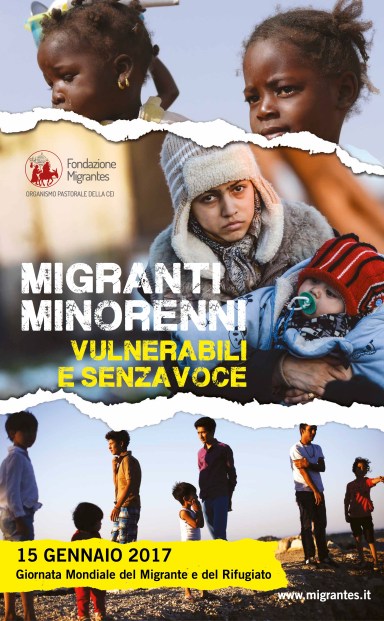
Dare voce a chi non ha voce. La Giornata Mondiale del Migrante e del Rifugiato

La Chiesa celebra Domenica 15 gennaio la Giornata Mondiale del Migrante e del Rifugiato. Quest’anno, Papa Francesco ha scelto come tema: “Migranti minorenni, vulnerabili e senza voce”. Questa giornata ha più di cento anni e fu istituita nel 1914 da Benedetto XV.

Come ormai tutti sappiamo, la questione dei migranti e’ diventata un’emergenza globale. Secondo i dati riportati dalla Fondazione ISMU, sono oltre 181mila gli arrivi via mare registrati nel 2016 in Italia, in aumento del 18% rispetto all’anno precedente. Di essi, 25mila sono minori, di cui il 14% non accompagnati. Con questa Giornata siamo chiamati  a dare voce ma soprattutto risposte a questi esseri umani, soprattutto donne e bambini, che sono costretti a fuggire e a lasciare tutto, nella speranza di una vita migliore. Ma quali risposte possiamo dare? La nostra semplice risposta è una questione di buon senso: umanità, generosità e competenza.

gmm-2017_manifesto

In primo luogo, notiamo che molte informazioni che ci vengono date o che riportiamo non sono corrette. Questo è spesso responsabilità di alcuni media, ma anche  nostra, come  cittadini. Abbiamo infatti il dovere di informarci e di non giudicare in base al sentire e all’apparenza. Soprattutto quando si tratta di questioni così fondamentali e delicate, come quelle della vita e della sicurezza di esseri umani in fuga perché a rischio della vita e della loro incolumità.

Dalle informazioni che riceviamo e da come noi parliamo, sembra che migranti e i rifugiati siano una fetta molto ampia della popolazione italiana. Sempre secondo le informazioni della Fondazione Ismu, riportate in un recente articolo del Sole 24 Ore , gli italiani credono che gli immigrati siano il 30% della popolazione, mentre si tratta di un mero 10%. Similmente, si ha una percezione più ampia della presenza musulmana, che suscita in molti una certa apprensione. Tali errate percezioni certo non aiutano ad affrontare la questione migranti, che richiede la cooperazione e la buona volontà di tutti, dalle istituzioni internazionali, ai singoli governi, fino a noi cittadini.

Poi ci siamo noi cristiani. Specialmente noi, non possiamo sottrarci al dovere della carità e non possiamo essere vittime della paura, tanto più se immotivata. Dobbiamo inoltre superare visioni ristrette e antistoriche. I cristiani hanno come vocazione quella di passare dal particolarismo all’universalità. Il Cristianesimo è per sua natura aperto al mondo. Non a caso si è adattato a molteplici culture e sistemi sociali, “fino agli estremi confini della terra”.

Per questo seguiamo l’invito del Papa e quanto detto profeticamente da San Giovanni Paolo II all’inizio del suo pontificato. Apriamo i confini politici ed economici degli stati. Apriamo le case sfitte, le parrocchie e gli istituti religiosi. E soprattutto apriamo i nostri cuori verso questi nostri fratelli e sorelle che soffrono. Ci renderemo conto ancora una volta della realtà del Vangelo: se metteremo insieme le nostre forze verrà fuori qualcosa di bello e di umano, come i cinque pani e due pesci che condivisi e distribuiti con equità, con l’aiuto del Signore, hanno sfamato tanta gente.

E siamo fedeli alla nostra storia. Già nel 1914, Benedetto XV, scriveva ai vescovi diocesani italiani la lettera circolare “Il dolore e le preoccupazioni”, dove chiedeva di istituire una Giornata annuale per sensibilizzare e raccogliere offerte in favore degli emigrati italiani. Nel corso degli anni si è poi sviluppata e aggiornata questa iniziativa profetica del Papa, nata nell’ambito della Prima Guerra Mondiale, per arrivare alla struttura odierna. L’azione pastorale della Chiesa riguardo alla questione migratoria ha quindi una lunga storia e una notevole esperienza, ed è sempre stata una parte fondamentale della sua Dottrina Sociale. Noi cristiani dobbiamo metterla in pratica, attuarla nel mondo, secondo i tempi e i momenti.

La storia insegna che la paura è sempre stata una cattiva consigliera. Le nostre paure, poi, sono relative. Dal punto di vista dei migranti, quelle che sono le nostre paure sono invece una speranza. In fondo se la nostra cultura europea e occidentale oggi si sente più fragile, insicura e minacciata significa anche che finalmente altri popoli stanno rivendicando dignità e cibo per i loro figli, dopo secoli di oppressione e sfruttamento. Quello che il beato Paolo VI aveva preannunciato nella Enciclica Populorum Progressio si sta verificando oggi. E realmente oggi capiamo meglio che “lo sviluppo è il nome nuovo della pace”.

Convertiamoci dunque verso uno stile di vita più sobrio, verso gesti di carità concreti, invece di tante forme di devozionismo al limite della fede che non portano beneficio a nessuno, tanto meno al nostro cammino cristiano e alla nostra anima. Un gesto di carità, una preghiera, un diverso stile di vita personale possono portare qualcosa di bello, magari una vita migliore, a qualcuno. Aggiungiamo un gesto di carità, un po’ del nostro tempo, a un Ave Maria che ci viene chiesta come penitenza nella Confessione. “La carità copre una moltitudine di peccati” – dice la Scrittura. Siamo una piccola goccia nell’oceano, diceva Santa  Madre Teresa. Eppure quella “piccola matita nelle mani di Dio” vediamo cosa ha fatto.

Oggi sullo scenario internazionale si affaccia una grande opportunità per affrontare efficacemente il fenomeno migratorio. Il nuovo segretario generale delle Nazioni Unite Antonio Guterres ha diretto per tanti anni l’Agenzia delle Nazioni Unite per i Rifugiati (ACNUR). La sua esperienza in questo ambito è un fattore molto importante e certamente ha pesato sulla sua designazione. E’ una cosa che lascia ben sperare. Il mondo, nella sua sede istituzionale più importante, sembra essersi finalmente deciso ad affrontare risolutamente e senza più rinvii la crisi umanitaria legata all’emergenza migranti, emergenza che è ormai quotidianità. Guterres è anche un cattolico praticante. Pensiamo che potrà così unire le competenze tecniche e politiche all’umanesimo cristiano.

E non ci dimentichiamo dell’opera misericordiosa e profetica del nostro amato Papa Francesco, che ha deciso di guidare lui stesso in prima persona la sezione dedicata ai migranti del nuovo dicastero sullo Sviluppo Umano Integrale.

Preghiamo e operiamo come possiamo per questi nostri fratelli e sorelle, apriamo a loro il nostro cuore, ciascuno secondo le sue possibilità, sensibilità e competenze.


Leave a comment

能改变生命的注视

耶稣希望看见匝凯,匝凯渴望看到耶稣。基督徒的生活基本上就是这些注视的结果。神与人彼此寻找对方,因为他们互相思念。只注意自己,不关注他人,这不是基督徒的生活;先看自身的罪过,这样也不是基督徒的生活;只看规章制度,也算不上是基督徒的生活,耶稣首先注视的是人和他的需要,就是为成为一个完人所需要的那些。我们无论是在面对自己,还是面对他人的时候,都需要拥有一个积极的人生观,好能让这个天主的肖像和模样不断成长。然后,耶稣会喊你的名字;对你说:我真的爱你,爱那个拥有自己故事的人,爱这个生活在矛盾中的你,分享你的快乐和你的悲伤。我想进入你的家,与你一起进食,不是为了判断,而是为了与你一起更亲密的生活。

基督徒的生活是与圣父建立密切的关系,这位父就是耶稣启示给我们的;不是一大串的罪过要告解,也不是要为众多的罚而做补赎。天主的爱,他的怜悯永远是一切的基础,一切都会到来。“今天,救恩来到了这一家”。不是明天,也不是复活之后,而是今天,在日常生活中,在每天的掰饼中,在期待最后的完成中,我们已经享受了天主的临在。匝凯感受到了被爱,就像当初伯多禄和保禄那样,就像罪妇,天生的瞎子或圣经中所列举的很多很多其他的人所感受到的。感受到被爱是一切在基督内悔改的开始。

基于诫命或道德原则的“悔改”会产生狂热,严厉,伪基督徒的英雄形式。匝凯感受到被天主所爱,然后找到摆脱直到昨天还在主导他的不正义生活的勇气:“主,你看,我把我财物的一半施舍给穷人;我如果欺骗过谁,我就以四倍赔偿”。与权力和不公正断绝一切关系是检验一个人真正悔改的非常真实和有效的凭证。很多基督徒,用左手写字,用右手做事,反过来亦然。然而,需要上到基督徒生活的树上,也就是提升到耶稣所讲的真福的层面上,自由自在地感受被爱和爱。


Leave a comment

Yet another of Pope Francis’ surprises

In preparation for the Synod on youth to be held in 2018, the Pope writes a letter to young people and plans to consult with them directly through a questionnaire. 

Today the Preparatory Document for the XV Ordinary General Assembly of the Synod of the Bishops was presented in the Vatican on the topic “Youth, Faith and Vocational Discernment”.

The Holy Father surprised us by accompanying this presentation with a personal letter addressed to  young people all over the world:” A better world can be built also as a result of your efforts, your desire to change and your generosity. Do not be afraid to listen to the Spirit who proposes bold choices; do not delay when your conscience asks you to take risks in following the Master. The Church also wishes to listen to your voice, your sensitivities and your faith; even your doubts and your criticism. Make your voice heard, let it resonate in communities and let it be heard by your shepherds of souls” (Pope’s Letter to Young People).

 The Pope also wished to give another very important gift to the young people who will be  visiting the Synod to be celebrated in October 2018.  In addition to the Questionnaire sent to the representative bodies with the right to be consulted (The Synods of Bishops and the Councils of the Hierarchies of the Catholic Eastern Churches,  the Episcopal Conferences,  the  dicasteries of the Roman Curia and the Union of Superiors General), there is the great novelty of  a website for consulting  all young people by means of a questionnaire on their expectations and their life. The answers to these two questionnaires will form the basis for the preparation of the Working Document which will be the reference point for discussion by the Synodal Fathers.

papaegiovani_mini

Once again Pope Francis has amazed us  and is encouraging us to be exponents of the Gospels and authentic and courageous witnesses of Christian life.Young people all over the world have been “convened” ;  they have been called upon to make their voices heard, voices all too often stifled by the world of adults.

“I would also remind you of the words that Jesus once said to the disciples who asked him: “Teacher […] where are you staying?” He replied, “Come and see” (Jn 1:38) ( Pope’s Letter to Young People). We begin this synodal knowing that the Lord calls us to follow him with confidence and passion, assured that during the trip He will always be with us.


Leave a comment

宗座书函《慈悲与怜悯》说我们要接纳人,要接纳他的处境

特殊慈悲年以教宗方济各赐给我们的宗座书函《慈悲与怜悯》结束了。他以若望福音第八章耶稣与罪妇相遇来勾画出导师教会的任务和慈悲工具的使命。教宗方济各认为不单要在每天的生活里生活出慈悲,还要以礼仪来庆祝。

“圣奥斯定以慈悲和怜悯这两个词语来描述耶稣和罪妇的相遇(若8,1-11)找不到比这个更美更一致的言辞,它可以用来了解天主遇上罪人所表达的爱的奥秘:《只剩下他们两个:受怜悯的和慈悲的》这个记载充满多么的怜爱和属神的正义!它的教导可以用来光照特殊慈悲圣年的闭幕,指引我们被召要行走的将来的方向。 […]慈悲不可能是教会生活的括号,而是它存在的全部,这样它可以表达出它可见的福音的真理。一切都在慈悲中完全显示,一切都在天父慈悲的爱里得到解决”(慈悲和怜悯1)

耶稣的喜讯不是一个新的哲学思想,而是一个回应不同世代所有的人要被爱的渴求,从所有的奴隶中被解放出来的渴求。所有的人不单是慈悲和爱的对象,而是可以自由去爱的主角。不论谁,要治疗世界的仓伤和保卫大自然,不可以拒绝任何人,这个是天主的心愿。我们不要忘记感谢每一个善意的行动。

“当被邀请到一个法利塞人家吃饭时耶稣作了一个很清楚的教导,一个公认是罪人的妇女走近他(路7,36-50)她用香液洒在耶稣的脚上,以泪水湿了他的脚,又以头发加以擦干(路7,37-38)。法利塞人很吃惊,耶稣便回答说:《她的很多罪得到赦免,因为她爱得多》(47) […] 宽恕是天父最可见的爱,耶稣也愿意在他生命中将它显示出来。福音没有一页不讲这个爱到宽恕的高峰。就是在他地上生活的最后一刻,就是当他被钉在十字架上的时候,他有宽恕的话要说: «父啊,原谅他们吧,因为他们不知道在做什么» (路 23,34). (慈悲和怜悯2)。

misericordia-foto-papa

圣咏85提醒我们慈悲和真理相遇。慈悲不是一个表示爱的行动,不是一个从上而下表示天主的爱的传达,它有更多内容,慈悲是与对方的真理达到共融,与每一个人的天主子女的尊严达到共融。人的真理是他首先是造物主的肖像和相似,可惜有时,真理跟慈悲分开来讲,前者属教理,后者属牧民,这是悲剧性的错误,因为慈悲不是牧民的方法, 而是福音,是天主的心意。

“这两个女人,奸妇,罪妇,她们心里得到多大的喜乐!宽恕让她们终于感到自由,有从没有感到的快乐。羞耻和痛苦的眼泪被转变成感到被爱的微笑。慈悲带出喜乐,每次我们做这个经验时都会涌现出来的。(慈悲和怜悯3)

将重点放在喜乐很重要,在福音的喜乐中教宗方济各提醒我们喜乐有不可缺少的灵修,圣经和社会层面。童年福音描述的圣诞喜乐已升到地平线上了。可惜,有时基督徒与痛苦和黑夜结盟,与保守和复古连在一起。他们害怕现代,他们害怕由圣经先知预言的新的事物。有些人立了坏榜样,有些人认为才能是要埋在地穴里的宝藏,对崇高理想,自由,友爱和平等的追求被过分的谨慎压制,而取向一个顺重权威和重视服从的贫乏的信仰。我们要全力打破这个要将才华埋在地下的基督徒思维。保禄说我们是白天的儿女,我们醒来不是要将才能隐藏,而是要好好运用它,有圣神的魄力和力量改变世界。基督徒是光明之子,不是蜡像馆的看门人,或一个在栖息的堡垒战士。

[…]聆听圣言也有它的特殊价值,每个星期日天主圣言在基督徒团体里被宣讲,因为在主日它得到来自复活的光照(慈悲和怜悯6) 在修和圣事中,天主指示悔改归于他的路,邀请我们感受到他很接近我们。这个宽恕来自仁爱。[…]我们关闭自己和不能宽恕他人时多么痛苦!怨恨,忿怒和报复令到生命不快乐,使慈悲的努力和喜乐消失。(慈悲和怜悯8) […]让我们以更新了的牧民热情来记住保录宗徒的话: «天主透过基督与我们和好,将修和的使命交了给我们»(2 哥5,18)(慈悲和怜悯11)

教会是同一个人类历史的酵母,我们不反对任何的思想,而是修和的标志和工具。修和是交了给我们的使命,是交了给我们的圣言,不是交了给我们战斗的口号,或某些天主教徒感到的原教主义,它要我们宣示伊斯兰是原教主义,是反基督宗教,我们要当心,不要辜负托付了给我们要修和的使命,无论要付出什么的代价,慈悲的话可以打破障碍,推倒城墙,带动修和,给予真正的和平,这个才是真正的圣经哨兵和修和的呼声。

我们会因这个圣言受到审判,天主会从这里开始问我,你为弟兄做了些什么?你怎样跟弟兄和好?你是否在宣称它是宗教战争,其实它是利益冲突,你是否掀风点火,或你做了修和,忍耐和宽恕的行动。我们会因此而受审判(玛25),天主圣言是天主爱我们而说的话,他说给我们听,给世界和,给历史听。教会需要有人经历过和见证天主圣言是有效的,见证它能发挥它被派遣来的作用。

“在圣年中,特别在慈悲周五我们可以感到在世界中的善良,我们可能没看到,因为它们每天都静默地实现出来,它们没有制造新闻,但它们是善良的具体记号,是对弱小的和无助的,对孤独和被舍弃的人表示的温柔,仁爱的主角是存在的,他们使贫苦的和不快乐的人感到他们的团结, […] 到了要给慈悲它的创意和空间的时候,好能使更多的来自天主恩宠的行动和仁爱的计划诞生,教会今天需要讲出耶稣完成了但没有写下来的«很多其他的行动» (若 20,30).” (慈悲和怜悯17-18)

慈悲代表教会今天与历史的约会;在初期几个世纪里我们为信仰辩护;然后我们将福音传到世界的尽头;可能今天基督徒的任务是告诉现代的世界,我们的历史是一个贫乏的历史,由谦卑的人,以汪洋大海的血写出来的,但它是一个救恩的历史,在这个历史中天主圣父不断伸出他的手,慈悲的福音不断实现。

“关注到“被社会遗忘了的人的禧年”之时, 当全世界的主教座堂和圣母朝圣地关闭圣门时,我得到灵感,特殊圣年要在整个教会庆祝一个具体的记号,特别在常年期第三十三个主日世界穷人日来庆祝,这堪当我们主耶稣基督普世君王的预备,因为他与弱小和穷人连在一起,他会以慈悲的工作来判断我们” (玛 25,31-46). (慈悲和怜悯21)

“请叫众人散开,他们好往四面乡村里去借宿找吃的,因为我们这里是野地。” 耶稣说:“你们给他们吃吧!” (路9.1-13)

福音要我们留意圣体跟仁爱的关系。在群众的饥饿面前宗徒们装作看不见,他们的诱惑是远离问题,他们看不见问题背后的人,面孔和具体的经验。如果我们叫众人散开圣体会成为我们的判刑,他们已在我们的房子前在我们的教堂前聚集。在生命中我们用很多方法远离穷人,我们装作看不见眼前的一切,为使我们的良心过意得去,我们会说要改变一切是不可能的,我们也可以将自己封闭在自己的富裕生活中,只会打开手拿出一点冒犯人的施舍。圣体和慈悲是漠不关心的相反,是个人主义和请人离开的逻辑的相反。我们要小心不要掉进将圣体变成一个私人和亲密的敬礼的危险里。我们不要以为可以将一切都在我跟耶稣单独的关系来解决,以为在这个关系里其他人和世界都不再存在。

今天我们强烈地感到教宗方济各的先知性的讲话 <不要让人拿走你们的希望>。我们要作出反应,基督徒世界的反抗是分饼,是与群众分享,是将我们自己拿出来,像分饼一样与群众分享,感到对人的同情,同情徒步跟随你的人,或以驳船跟随你的人,因为他们信任你,信任你基督徒的行为,信任你来自意大利这个人权的国家,信任我们这个国家的美丽。

我们要重燃我们的希望,打开使人疲倦的自我封闭,我们的个人主义,从自己的社团和民族个别的隔离,好能紧急地为自己打开一个将来。今天我们要勇敢一点,多一点考虑基督徒的希望和与饥饿的人并肩奋斗。在这个喜年结束之时我们需要有什么行动?我们需要有具体行动的基督徒,善意的男男女女;我们只需要可加的人士;我们只需要胜任的人,最好没有推荐的人,我们需要关心近人和愿意服务的人。如昨天救恩不在乎割损的或没受割损的,今天我们也不重视一个偏左或偏右的人,一个传统的或进步的,我们需要的就是一个自我,一个被上主所爱和被他救赎了的一个新的受造物。
(注:本文用了宗座书函《慈悲与怜悯》非正式翻译. 正式英文的翻译在这里)