ConAltriOcchi blog – 以不同的眼光看世界-博客

"C'è un solo modo di vedere le cose finché qualcuno non ci mostra come guardare con altri occhi" – "There is only one way to see things, until someone shows us how to look at them with different eyes" (Picasso) – "人观察事物的方式只有一种,除非有人让我们学会怎样以不同的眼光看世界" (毕加索)


Leave a comment

There can be no feasting without our sons and brothers

Fr. Francesco Pesce

God showers His blessings on the honest and the dishonest alike, He causes rain to pour on both the just and the unjust. However, He has a predilection for lost sheep, the stone cast aside, the prodigal son. This we must never forget, as Christians, who realise that we are ever in need of a new conversion, and as the shepherds of God’s people.

The Lord Jesus bears witness to the fatherhood of God, Who has sent His Son to rebuild a world according to the measurements of love, where even the lost sheep, the stone cast aside, the prodigal son are the object of the Father’s care, attention and mercy. A Father Who wants us all to be saved – as Pope Francis answered to a child in the recent book edited by Father Spadaro, SJ.

The Gospel for this Sunday of Lent recounts the well-known story of the prodigal son. Conversion does not mean becoming prodigal sons: it means overcoming the antithesis between the two sons, between virtue and sin, between those within and those without, and to overcome it by means of a synthesis, which is the work of love, in which those who belong to the world of virtue go beyond themselves, towards the bewilderment of the son who left his father and squandered his possessions. St. Paul explains the situation well in the Second Reading: God has forgiven us by reconciling us with Him. Therefore, God expects us – and we too should expect it of ourselves – to forgive others. St. Paul even speaks of a “ministry” that God has entrusted to each of us.

Why this idea of conversion? Basically for three reasons. The first is that each one of us belongs, at one and the same time, to the world of both the sons of the Gospel story. No-oneshould live under the illusion that he or she dwells only in the house of virtue. The second reason lies in the fact of being sons, which is not a merit, but a fact, and we Christians also believe that it is a free gift of God. And we are all sons, by virtue of the gift of His mercy.

The third reason that should prompt us to go out towards the prodigal son, to those who have done wrong, is simply because Jesus did so. It is not a question of (purely formal) obedience to God (often viewed as a master) that makes a Christian, but but our likeness to Jesus, Which our merciful Father sent to save us; the Beatitudes, in fact, and not the Commandments, are specifically Christian.

We must learn to understand and accept those who become lost. And we must bravely search within our “virtues” for their often self-righteous and sectarian characteristics, in order to enter into another measure of human brotherhood, based on reconciliation, like St. Paul, a great sinner who later became the Apostle of the Gentiles, encourages us to do.

It is not sufficient to go and eat with sinners and then return to our homes; it is not enough to use the Gospel as a sort of unusual manual of good manners: this is hypocrisy. We must remove all the obstacles on the path of reconciliation and to transform the Father’s house into everyone’s home, where no one is cast aside.

The prodigal son must convert to virtue, the eldest son to mercy. The Father expects each one of us to undertake the never-ending journey of this double conversion. There can be no feasting, in heaven and on earth, if even only one of our sons and brothers is missing.


Leave a comment

A blessed crisis

We are pleased to publish the afterword of the recent book by the Vatican journalist of Rai 1 Italian television channel Aldo Maria Valli, titled “C’era una volta la confessione” (Once was Confession), published by Ancora. It is a reflection on the Sacrament of Confession at the time of Pope Francis and has also been published in the March 10 edition of L’Osservatore Romano, at page 7 .  This is our translation from the  original in Italian Language. We remain at disposal for promptly removing this post if it is not appreciated by the right owners.

Fr. Francesco Pesce

I belong to a generation that was educated to fear God, rather than to love him; during seminary, a new sense of duty was required, in the face of which it proved hard to remain free and joyful. I can still see this fear and twisted sense of duty today in many people who approach the Sacrament of Confession. Fear of God, fear of themselves, fear of others and their judgement. Confession as an obligation, not as a desired meeting with our Father, who is always willing to forgive us. I must confess that I was surprised to hear Pope Francis, in preparation for the Jubilee, speak of the «missionaries of mercy». I asked myself: but aren’t priests by definition missionaries of mercy? Isn’t forgiveness a very hallmark, so to speak, of the priest? Then I remembered that I had seen with my own eyes, in some confessionals, the Book of Canon Law, ready for use, like in a law court, and I also remembered the accounts of several penitents, injured by some priests who had been very harsh. And this helped me understand Francis’ idea. My experience as a confessor, in fact, has taught me that the advent of Pope Francis has blown away the old sense of fear and duty, and replaced it with the desire to meet a merciful Father. Not only have confessions increased exponentially, but the quality has improved too. Nowadays, many people enter the confessional holding a copy of the Gospels, having adopted his suggestion to read at least one passage every day. And so they confess themselves based on what they read. This fills me with a great joy. It is a true miracle worked by this man, Francis, sent to us by God. I can see that, thanks to God, people do not feel more sinful (I think that there are already too many people oppressed and humiliated by their sins), they now feel that their Father is more merciful. I wish to add that I see rather clearly, if I may say so, that when a person feels welcomed, respected, encouraged, then he or she can better understand his or her sins and ask for forgiveness. Indeed, he or she can understand that his or her sin, in a certain sense, has already been forgiven, that he or she is inside the confessional to accept the forgiveness that has already been granted, because God is love, in the brief, yet sublime, words of John the Evangelist. This is also why I believe that to speak of a crisis of the sacrament of confession is a contradiction in terms; it is the way in which the priestly ministry is practised, if anything, that is undergoing a crisis. Because this priesthood is confined to the sacristies, rather than lived out in the streets, it is a priesthood that prefers the smell of incense, and money, rather than that of the flock of sheep. Therefore, I see it as a “blessing crisis”. My experience has taught me that men and women come to confession in equal numbers. But two things do strike me, although I find them hardly surprising. The first is that the confessions of those who appear closest to the Church, who ways attend, are more predictable, matter-of-fact, and soulless; sometimes they even expect a good punishment rather than forgiveness. They are also those who don’t very much like Pope Francis, precisely because, they say, he’s «a communist, a pauperist, too predictable», plus other nonsense disseminated by the 21st century crusaders and by some very godless and hardly devout atheists.

I would like to give you an example: I have been a priest for sixteen years and I still have to struggle enormously to explain to catechists (who are otherwise saintly persons) that teaching children «Dear God, I repent and regret my sins, because by sinning I have deserved your punishment» is not the best thing. This should at least be better explained and replaced with other biblical acts of contrition. I also wish to mention those who find it absolutely necessary to confess themselves on a given day, otherwise they feel they have broken their devotional service and have to start all over again? Is this not an obsession rather than devotion?

The other thing that strikes me are the confessions of the members of certain ecclesial movements, and of one in particular, which is also quite widespread. These confessions all seem to be the same, as if part of a stock repertoire, totally lacking the sense of thanksgiving for the good there is out there. To these I always say: «Excuse me, but something nice and good must have happened to you since you last confessed, or is everything just sin?».

I would like to conclude by saying that I find it disheartening to see confession hours put up in churches. As much as I understand the need for planning and organisation, but the church is not a post office. My experience has taught me (I work as a parish priest in the centre of Rome) that priests should be available primarily at lunchtime and in the evenings, after the evening Mass, to meet the needs of working people. Of course, this can only be done if we keep our church doors wide open, like God’s heart, who we call upon as «Our Father, who is in heaven», not «Our Judge and Master, who lives in the confessionals».


Leave a comment

The Spirit breaks in to dissipate the fear of the world

Fr. Francesco Pesce

The Cenacle, where the Apostles had witnessed of the Supper of the Lord, where on many occasions they had gathered together to listen to His Word, becomes now a refuge, a bolt-hole, “for fear of the Jews” – as the Evangelist John recalls. And as the Acts tells us: When the time for Pentecost was fulfilled, they were all in one place together” (Acts 2,1).

It is worth remembering that in Jerusalem, the Apostoles did not have many friends, they had challenged the religious and political power, they were considered by most as fanatics followers of one of the many messianic sects in existence in those days. They risked their own lives purely for preaching that Jesus was the Son of God who had truly died and resurrected. Indeed, the Acts soon recount of the first martyr, Stephen, stoned to death.

So what are today’s fears which shut in our groups? Leaving aside the Church of martyrs, which we well know exits and resists to date in many parts of the world, we notice that in the Church and among many Christians is strong the temptation to withdraw in an elitarian faith, often even sectarian, pushing out the world, which is considered as evil, as the enemy to be scared of and to judge rather than love. It sometimes happens that our faith, our Christian community, our ecclesial group, rather than being a place of friendship and announcement of the Gospel, transforms itself into an unbeatable fortress, where those inside judge those outside keeping them out. A “Church that goes forth” according to the teaching of Pope Francis means not to be afraid and not to judge, but quite the contrary be strong in faith and widen the borders of brotherhood.

he-qi-pentecost1.jpg

Image: Pentecost by He Qi


It is precisely in this climate of fear and closure that the Spirit breaks in. “And suddenly there came from the sky a noise like a strong driving wind, 2 and it filled the entire house in which they were” (Acts 2,2) In that closed cenacle room filled with fear, the Spirit breaks in, acts and transforms it, changes the heart of those disillusioned men, and creates a new brotherhood as far out as to the edge of the earth. That is why everybody was able to hear others speak in their own native language – the Acts reminds us.

Even today the Spirit calls us to look forward, open the boundaries of our heart and listen to the Word. The Gospel is not a script to copy and the Church is not a museum to protect. In its origin, the Cristian community had the courage to welcome in its bosom the non-circumcised, by being inspired by the Holy Spirit. That Church also had the audacity to write down the Good News and had been a pilgrimage to the end of the known World. It is up to ourselves today to pass on in the same way “the Gospel we have received”, without fear, without shame, and everywhere we go in this globalised world. “The Advocate, the holy Spirit that the Father will send in my name – he will teach you everything and remind you of all that (I) told you” (John 14,26).

It is not an easy task to bear witness to the Church of the Pentecost as it is the Church of joy (as the blessed Pope Paul VI reminded us) but also the Church of martyrdom. Do not be fooled in thinking you will not have to pay a price, even personal. Quite the opposite, living the Gospel of the “sacred gestures” locked in the sacristy or hidden behind the smoke of incense is undoubtedly easier. The Spirit instead calls us to embark onto the paths of life, and walk along the way (odos) as the Gospel is called in the Acts of the Apostles. The most difficult language will be that spoken by those we come across with, those we are dealing with, those who are against us, perhaps in the belief they are acting for the good. The Spirit will teach us also this language.


1 Comment

Viet Nam: flowers for Mama Mary/Fiori per la Madonna 

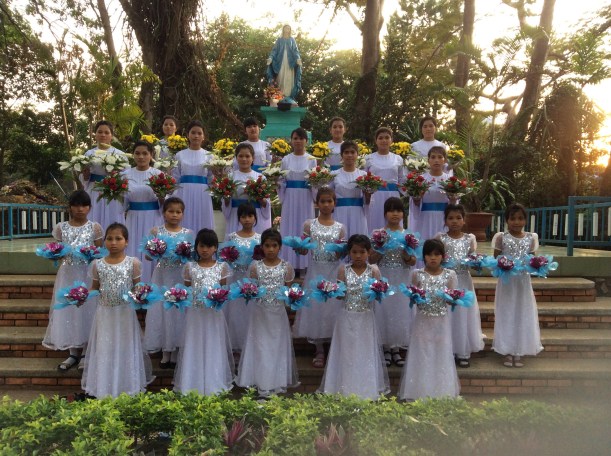
We are so happy to post a first nice contribution from sister Mary Tran from Viet Nan. Sister Mary is a wonderful Catholic sister working to suppor poor children from ethnic minority groups. Through the help of the sisters, these children are able to receive  appropriate education and live in a boarding school where they receive the care and assistance of the sisters. The first two photos attached to the post refer to this year and the last two to May 2015.

Con grande gioia postiamo un primo blog di suor Mary Tran, dal Viet Nam. Suor Mary e’ una meravigliosa suora cattolica che lavora per favorire l’istruzione dei bambini appartamenti a famiglie povere delle minoranze etniche. Attraverso l’aiuto delle suore, questi bambini ricevono un’istruzione adeguata e vivono in una scuola dove ricevono cure e assistenza. Le prime due foto si riferiscono a quest’anno, le ultime due a maggio del 2015.
 

Sr. Mary Tran 

As usual, during the month of May which is dedicated to Mother Mary in a special way, there is a nice tradition in Viet Nam whereby  the children in most of the parish churches offer flowers to The blessed Virgin Mary.
This year the children of our boarding school were assigned to offer the flowers on the first Saturday of May at our parish church in Kontum diocese.

©Huong Tran, Francesco Pesce 


©Huong Tran, Francesco Pesce 


©Huong Tran, Francesco Pesce 


©Huong Tran, Francesco Pesce 


Come da tradizione, durante il mese di maggio che è dedicato alla Madonna in maniera speciale, in Viet Nam i bambini della maggior parte delle parrocchie offrono fiori alla Santa Vergine.

Quest’anno, ai bambini della nostra scuola e’ stato assegnato di portare i fiori il primo sabato di maggio, nella nostra parrocchia nella diocesi di Kontum.


Leave a comment

Jesus is Risen! Alleluia!! Easter song as sung in a small town of India!

We are happy to publish the first blog post of Fr. Pinto, from India, another dearest friend of ours. He is such a wonderful person and very committed and always smiling priest. We often remember him and are grateful to him for great help he gave to us in our pastoral work. We miss him very much but we are happy to see that he is doing well in that great country of India. We are still in Easter time so that sharing this experience of him and his community is still relevant and meaningful.

Fr. Pinto Rockwin

For Christians, Holy Week, starting on Palm Sunday and ending with Easter Sunday (March 27 this year) is considered the source and summit of ecclesiastical and liturgical year. Maundy Thursday, Good Friday, Holy Saturday along with Easter Sunday – are called sacred Triduum whereby Christians commemorate the last days of Jesus here on Earth when he expressed his deep most love for His people through his passion, death and resurrection.

Here, I narrate these three-day experiences of a small town called Kulur in the city of Mangalore, India. The parish is dedicated to the patronage of St. Antony of Padova. On Maundy Thursday, reliving the cenacle experience of Jesus, for the first time, women were included in washing of the feet of the disciples as per the Pope’s directive (see photos). Priest who is considered as a an eminent figure in the society here, the washing of the feet communicates a very formidable message of service and humility as intended by our Lord.

On Good Friday, apart from the liturgical service as prescribed by the Liturgy, there is a particular custom in this part of the world. They call it ‘Bringing down Jesus from the Cross’. A group of persons come in with lanterns and climb the ladder first to remove the nails and then, to bring His body down from the cross followed by the procession of the statue of Jesus and Or Lady of Sorrows in the town (See images). Incidentally, this year witnessed the culmination of 25 years to this custom.

Finally, on Holy Saturday, the church filled with the faithful participated in the luminous liturgy of Easter night and renewed their Baptismal vows. People usually abstain from eating meat throughout the Lent season, thereby, day of Easter when the angels sing, ‘Glory’, peoples acclaim, ‘Alleluia’, they enjoy their fellowship meal in their families. Being a Catholic Priest from few months I sincerely experienced the profound significance of these moments which we commemorate every Sunday, on the day of the Lord.


Leave a comment

Ora et labora: Pasqua/Easter in Benin

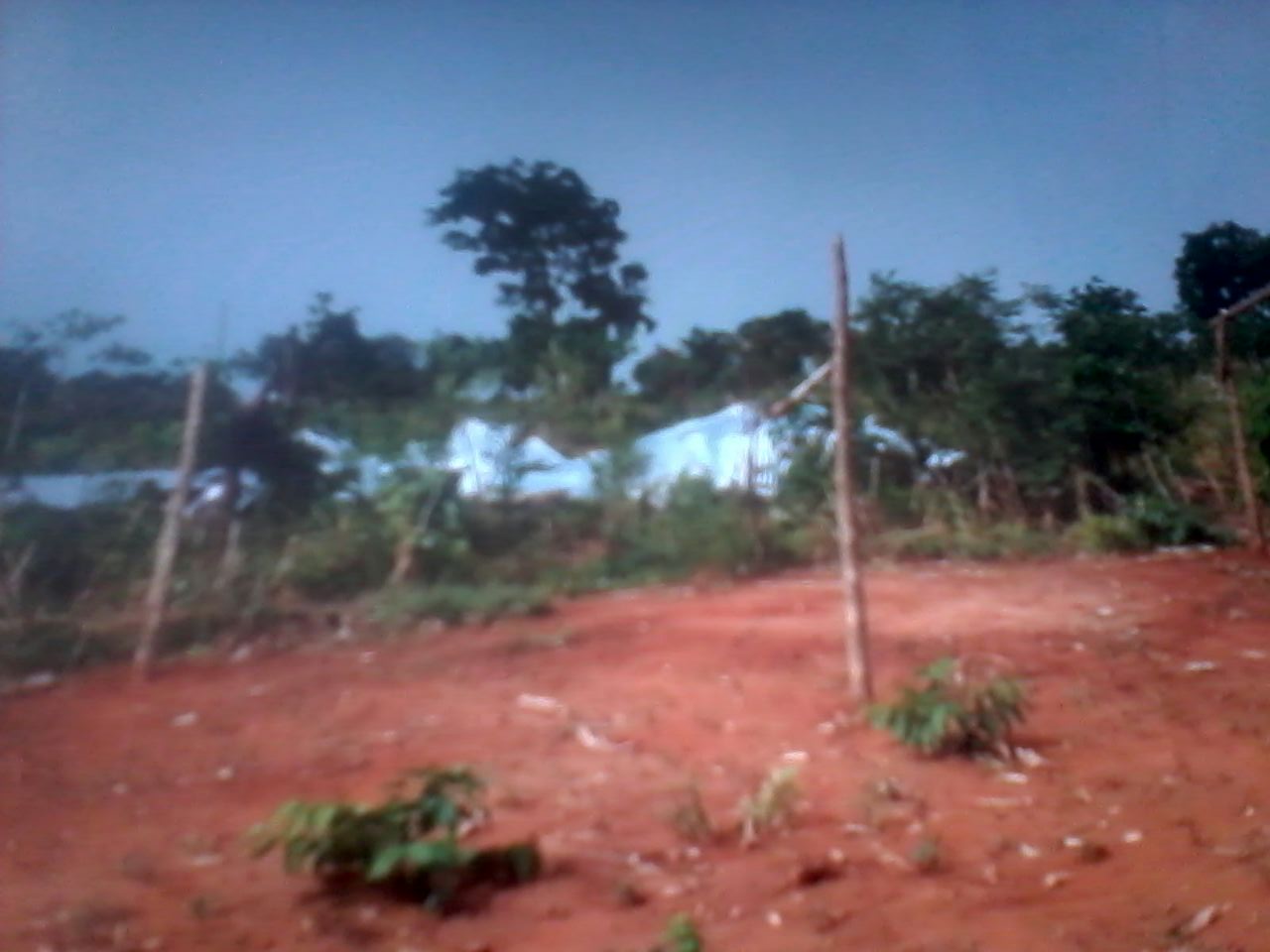
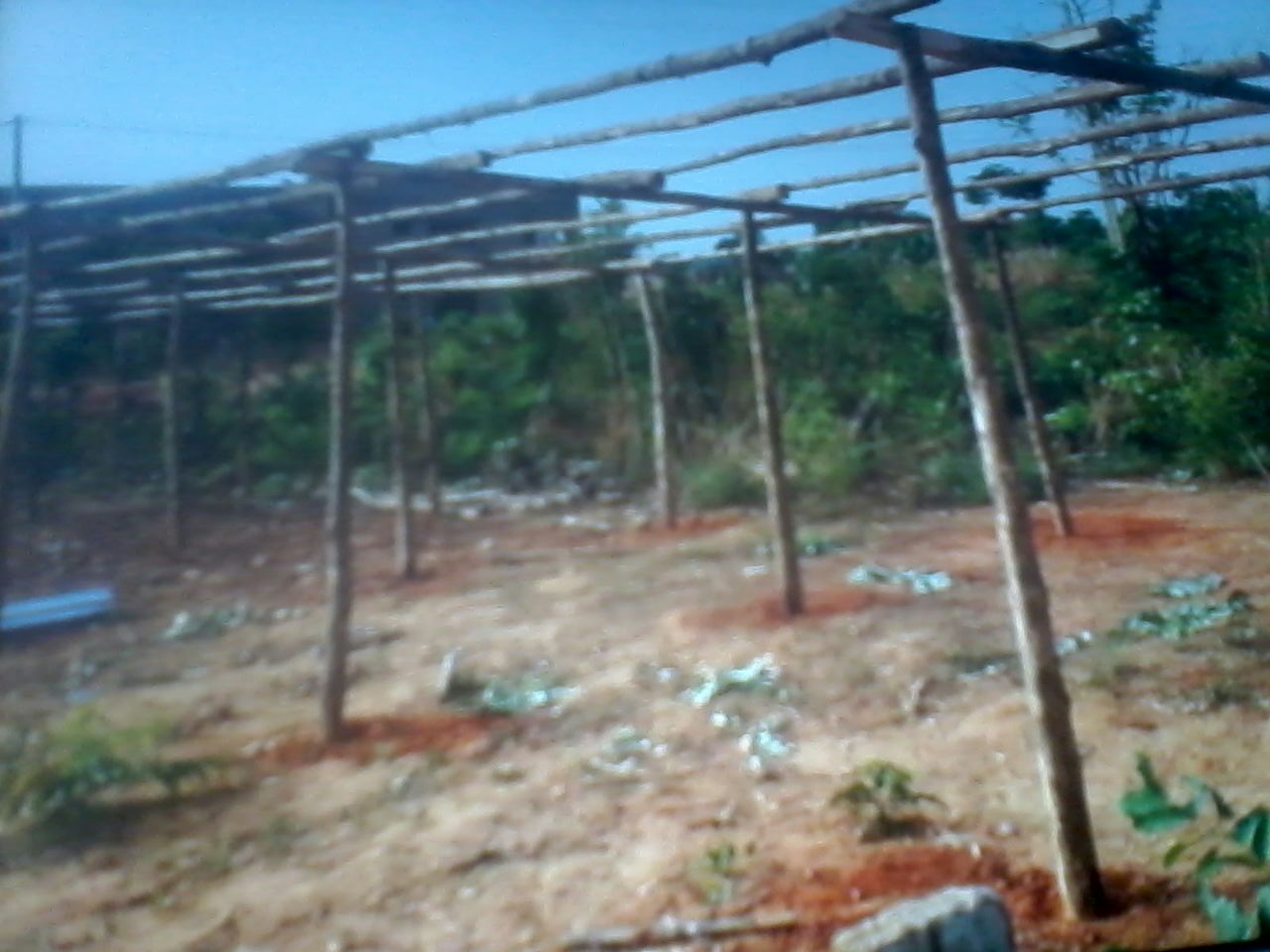
Riceviamo una testimonianza di Don Igor Kassah, sacerdote del Benin, che opera a Natitingou, nel Nord del Paese. Ci manda alcune foto dei lavori di costruzione di alcune capanne che servono per far riparare i fedeli dalle piogge e consentire loro di partecipare alla Messa e ai vari momenti liturgici – che si tengono all’esterno – senza bagnarsi. Purtroppo delle piogge particolarmente violente qualche settimana fa hanno distrutto alcune delle capanne già parzialmente costruite. Sono purtroppo rimasti vittime anche due bambini che giocavano per strada. Don Igor e i fedeli però non si sono scoraggiati, hanno messo insieme dei risparmi e hanno avviato nuovamente i lavori di costruzione, che tra poco dovrebbero essere ultimati. Riceviamo anche qualche foto della Veglia pasquale – l’accensione e benedizione del fuoco, luce di Cristo – e un battesimo. Segni, ci sembrano, di una Chiesa viva e giovane, che prega e lavora.

Fr. Igor Kassah, a priest from Benin working in Natitingou, in the Northern part of the country, shares with us some experience from his community, including photos. They are building some tents that are instrumental to having the faithful be protected by the rains and participate safely in the Mass and various liturgical celebrations, which take place outdoor. Unfortunately, the construction works have been damaged by some heavy rains a few weeks ago. Two children who were playing outside even died. Fr. Igor and his community, however, did not lose hope and put together some savings to start up the construction works again, which should be completed soon. We also receive a few photos about the Easter Vigil Mass, with the blessing of the fire, light of Christ, and the celebration of a Baptism. Symbols, it seems to us, of a lively and young Church, which prays and works.


Leave a comment

Nuovo blog/New blog/新的博客 www.conaltriocchi.org

Desideriamo segnalare che il blog, prima visibile in un’altra piattaforma e su un altro indirizzo, da ora in poi sarà visibile al link http://www.conaltriocchi.org

Ringraziando i lettori che dall’inizio di questa avventura hanno mostrato interesse e attenzione verso il nostro blog, ci scusiamo di ogni inconveniente dovuto a questo cambio e ribadiamo il nostro impegno a continuare a condividere e testimoniare anche attraverso i social media la bellezza del Vangelo e la Chiesa in uscita di Papa Francesco.

We would like to inform our readers that from now on our blog will be accessible at http://www.conaltriocchi.org

While thanking our readers, who from the very beginning have shown interest in and attention towards our blog, we apologise for any inconvenience that this change may cause and we re-emphasise our commitment to continue to share and witness the beauty of the Gospel and the open Church of Pope Francis, including through the social media.

ConAltriOcchi blog
16/04/2016


Leave a comment

A miracle in the Church: Pope Francis

Recalling thoughts, hopes and prayers of the day of the election

Monica Romano
“In my life, this is the first time I have witnessed a real miracle with my own eyes”. I still recall so clearly the words of my spiritual Father and earlier parish priest – fr. Enrico Ghezzi – when Pope Francis was elected. We were all understandably very touched and felt emotional about the new Pope’s election. But at least for me this time was a bit different from my only previous time (I was too little to remember the earlier elections of “the two John Paul”). The Church was coming out from such a difficult time that ended up with Pope Benedict’s resignation – certainly because of his old age, but possibly also due to the issues the Pope had to face, such as the betrayal of his closest collaborators and an institution that because of the behaviours of individual, often authoritative, representatives had seen heavily affected its credibility and the trust of the people.  

I still recall the moment of the election so vividly. Guessing (and hoping) from the name pronounced in Latin by Cardinal Touran and not understood clearly because of the underlying translation (I was not in Italy hence followed the event from a foreign TV programme) that the new Pope was the archbishop of Buenos Aires – the one I had heard was a simple and humble pastor, the one that according to some “speculations” was “the candidate” of Cardinal Martini on the occasion of previous papal election – literally made me jump from the chair. And the second (real) jump was while listening to the name he chose. Just a few minutes before, by messaging with a friend who was in Rome, we were asking to ourselves what name the new Pope would choose. We wrote a couple of names we hoped for and when typing “Francis” I clearly recall my friend stigmatizing: “Magari, that is impossible”.

Instead, we were once again surprised and made happy by God. Once more we realized that what the Gospel teaches is the truth: “Nothing is impossible to God”. I cannot forget the mixed feeling of expectation and preoccupation that I and some of the people closest to me had been going through over the previous weeks following Pope Benedict’s resignation. Our response and way of living that “waiting time” was praying. I remember that for several weeks  after Pope Benedict’s resignation I used to pray at any time (even unusual time) I could, whenever I had  a “gap” during the day – for example while preparing myself before getting out in the morning or while seated in the car or on the plane….And so did the many people spiritually close to me – including my dearest grandmother, who kept telling me for some time after Pope Francis’ election: I prayed so hard for the new pope. What were we praying for? We prayed to “get” a holy person and a pastor close to his people. It seems we have been heard.
I also recall that I immediately understood that the times of a “cumbersome” centrality placed on the institution of the pope I had been used to since my childhood, particularly during the pontificate of John Paul II, had gone. I did not overlook the way Francis referred to himself to the people as the “bishop of Rome”, while only mentioning the vicar of his “new” dioceses –  the Church that “presides in charity”.  I felt and hoped that like for the choice of his name it was programmatic. And it was certainly striking that he presented himself for the first time to the people only dressed with the white papal vest, with no other liturgical vestments or paraments, except for the stola put on shortly while blessing the huge mass of people that gathered in St. Peter’s square. 

After the initial “mild” reaction from the square when the Habemus Papam formula was pronounced (probably because most of the people were not aware of who was “Georgium Marium cardinalem Bergoglio”), the warmth and emotion became tangible among the people at his gestures and words. Especially when Pope Francis invited the faithful to walk together – both “the pastor and the people” – in “fraternity, love and mutual trust”. And when he asked the people to receive the “prayer of you over me” and bowed in silence for a few minutes. But also when in blessing those in the square and who was connected through the modern communication technologies, he indicated that the blessing was also for “the whole world and all men and women of good willingness”. The spirit of the conciliar Church was felt strongly among many of us. Again we had another hope, that the new Pope would genuinely embrace, apply, and put forward the indications of the Second Vatican Council.
We believe that these are the first seeds of Pope Francis. By recalling them after three years, we happily feel that a new Church was born and has been flourishing from those seeds. What people like me, especially old pastors that dedicated their whole life to the Gospel and the Church, has been believing and hoping for – a Church of poverty, charity, openness and mercy, the Church of the Council – was realised and is being realised by this pastor, who “came from the other side of the world”. Let us pray for Pope Francis, as he keeps up asking us, everyday, regularly, for his peace and intentions. The power of prayer is strong and if all of us join our prayers, we will hopefully be able to help him sustain his mission – a mission of love, dedication, sacrifice and witness. 


Leave a comment

Pope Francis and China

Theresa Xiao
In the Far East and in various parts of the world, millions of men and women will celebrate the lunar new year. I wish that all may experience peace and serenity in the heart of their families.” With these words Pope Francis addressed his wishes to Chinese and East Asian people during the  Angelus prayer, a few days after the publication of the interview for AsiaTimes (http://bit.ly/1KTQ8No) , which focused completely on China. The Lunar New Year or the Spring Festival is one of the most important and popular festivities in East and South-East Asia – we prefer these denominations having a less Eurocentric connotation -, primarily in China. To the interviewer – finally a sinologist who knows well ancient and contemporary China – Francis speaks of the “Middle Kingdom” with words of admiration, as a “great country” with a “great culture” and an ” inexhaustible wisdom”, a nation that has “a lot to offer the world.”
 

In the footsteps of his immediate predecessors, Pope Francis shows great attention towards China. What primarily distinguishes him from the other popes, however,  is the fact of being a Jesuit and a Latin American. This definitely constitutes a “comparative advantage” that may help to have a greater margin of action in the long and thorny “Chinese issue”. Certainly, China associates the Jesuits with the idea of dialogue, openness, science, culture – embodied in a paradigmatic way in the great missionary Matteo Ricci, in Chinese Li Madou利玛窦. The fact that Pope Francis is not from the West of the colonial powers (which even today recall a very sad page of the Chinese history, a disgrace, an open wound) makes him appear to the Chinese people in a different way compared to his predecessors. Colonial powers which foreign missionaries often associated themselves to, in the eyes of the Chinese people. Contributing to this idea that persists even today, that Christianity cannot be anything but a foreign religion of the ” imperialist West.” There was a saying in the past: “One more Catholic, one less Chinese”, that was to emphasize the alien nature, almost an “incompatibility” between China and Christianity, at least in the Chinese imaginary.
Francis has undertaken with caution, but it seems with determination, the path of reconciliation and dialogue with China. Of course taking the important steps of his predecessors, especially the Letter to Chinese Catholics, which was perhaps conceived under the pontificate of John Paul II and realized by Benedict XVI. But softening  the tone and leaving less room for voices undoubtedly authoritative, as monopolistic, that especially in recent years have only ever denounced the dark side of China. Certain tones, certain insistence, and certain ways to represent China by some who have risked to almost appear as “doomsayers” are not in line with the Church of Francis; a Church of dialogue, mutual respect, and mercy. The Church that looks at and works on “what unites rather than what divides.” The Church of the Second Vatican Council, which in the XXI century cannot continue to “bypass” China (often labeled with images that seem old from 50-60 years ago) and relate to China only through  sentences and even excommunications, which have humiliated and hurt Chinese Catholics. The Great China of an ancient civilization, the China of Confucius, who lived 500 years before Christ and was a great teacher of moral and social harmony. China that generated the depth of thought, then evolved into a religious spirituality, of Daoism, characterised by a creative vitality. That China that received Buddhism from India, re-shaping it and mixing it with its own philosophical and religious traditions in a mutual enrichment. And in the modern era, China that first among the devoloping countries achieved the Millennium Development Goals and in the years 1990-2005 took out of extreme poverty over 470 million people. A concrete example to the world that poverty can be defeated if there is a political will. An achievement that the pope that  took the name of Saint Francis of Assisi certainly has not overlooked – unlike so many, religious people, journalists and commentators in various capacities. Because Francis can count on very close people who know and understand China and are in line with him with respect to what strategy should be followed.  Certainly the strategy of prudence and patience, but that does not mean closure and unwillingness to dialogue in order to find a compromise. Words that many do not like, those who do not see many realities, small and large, where mediation is the only way to move forward. Those that may also not know that the “middle way” is also a value of Chinese culture – the Doctrine of the Mean is one of the Four Books included among the Confucian Classics. The Chinese culture emphasizes harmony tending to seek it, to see it, even where there are opposites that in the Western view are irreducible. And often giving much attention to the form, the “ritual.”
For the Church that “goes forth” as indicated by Francis, this can be a great opportunity to capitalize on the dialogue. With a sincere respect for who has been and is now the counterpart, combined with a deep and pragmatic awareness. China,  a “great country” that has made great achievements in socio-economic development and acquired an important place on the international stage. Not without “side effects” – i.e., the environmental issue, the sustainability of a development process that has been as radical as perhaps too fast, the growing social inequalities, the challenges associated with impressive internal migration, an aging population …. Not to mention the consumerism and the galloping materialism which are eroding family relationships and social relations, corrupting traditional values and jeopardizing the future of the younger generation. Problems that China itself has learned to recognize and now seeks to address.
Even Pope Francis shows once again to know all this. It is part of human history, the history of peoples, to pass “through lights and shadows” and a reconciliation is also needed with its own history, its past, says the Pope to China in the interview, but he also says that to all of us and to all Nations. The Church in China also deeply needs for reconciliation. The Church in China too (which is often represented with clichés, in a simplistic way and by whom he has never known it directly), has kept the faith in very difficult times. The whole Church, not only one side. A gift, a grace that is certainly the inspiration, the outpouring of the Holy Spirit.
We are sure and we pray that Pope Francis did not drop all this but values it, builds on it, brings it to completion, without lingering on entrenched positions. There is need to look and go further, to ensure that the Chinese Church is more and respectfully accompanied by the universal Church to better address new challenges – the same facing the Church (more generally the society) of the “Western world”, before it is too late. Secularism, the worldliness, careerism and materialism, individualism, which also invest Christians and may question their existential choices, undermining their witness of faith. And more intra ecclesia the problem of the formation (cultural, theological and spiritual) of the clergy and religious, lay participation and more generally the implementation of the Second Vatican Council, the role and the witness of Christians in society and in the world of culture , the proclamation of the Gospel in a context where Christians are a minority and where increasing prosperity begins to make more difficult among young people make radical lifestyle choices and of total donation to the Church ……
It is time to break down “old” walls of “enmity”, find points of convergence in the common values that can contribute so much to the construction of world peace, and also support the Chinese Church to become, with more prophecy, a Church that truly goes forth, as Pope Francis has been preaching tirelessly since the beginning of his pontificate.


Leave a comment

Isn’t it great to have friends come from far away?

Personal reflection on the interview about China and the Chinese People with Pope Francis
Rob Rizzo SJ

In entering into relation with another there is always the possibility of making mistakes while getting to know them, but I believe the biggest mistake would be to presume that we fully know the other and thus seal them within that definition.

I don’t have the pretention to think that I know what Pope Francis was thinking, but what he said about ‘the cake’ struck me. In this I saw an opening up, so as to not take ones own cultural background as a given, but to accept that the other may understand the very same thing differently due to different cultural backgrounds. Therefore this allows for dialogue and even gives space for interest and curiosity of one another to grow.

The possibility of making mistakes remains of course but should this scare or discourage us? I don’t think so, clearly the importance of acknowledging and evaluating the dangers remains however this should not discourage us from reaching out to one another. It is so freeing to hear that our (and my) past mistakes don’t mean that it’s all over. Rather than regretting the past and holding onto it, allowing it to keep me stuck in the past there is the opportunity to acknowledge it, learn from it and decide to walk towards a hopeful and realistic future. I love the image he used of water that keeps pure because it flows ahead, does it mean that the water has an easy and open stream ahead of it? I don’t think so, but the water as it flows downstream will naturally find even the smallest space to pass from, and as it goes along it is also purified passing through the rocks.

So what did I personally receive from Pope Francis’ interview? Hope, for dialogue, for learning and for resilience as this river flows.