ConAltriOcchi blog – 以不同的眼光看世界-博客

"C'è un solo modo di vedere le cose finché qualcuno non ci mostra come guardare con altri occhi" – "There is only one way to see things, until someone shows us how to look at them with different eyes" (Picasso) – "人观察事物的方式只有一种,除非有人让我们学会怎样以不同的眼光看世界" (毕加索)


Leave a comment

中国母后佘山圣母玛利亚

在上星期日天皇后喜乐經祈祷活动中,教宗方济各要求大家在五月二十四日教宗本笃十六世所建立的世界为中国教会祈祷日,和中国天主教徒一起祈祷。

在中国佘山朝圣地,圣母高举着她张开双臂的圣子,向世界展示祂对世人的爱与慈悲 ; 那里许多中国天主教徒朝拜“进教之佑”圣母。爱与慈悲是福音道路的主要途径,并体现在中国大地上。

每年有好几万中国人来到这个朝圣地祈祷,尤其是在中国佘山圣母主保庆日上。教宗本笃十六世曾经撰写了佘山圣母祷文,恳求她保佑全中国。教宗同样也在致中国天主教会的主教、司铎、度奉献生活者与教友们的信函里,把中国教会托付给了圣母;他要求五月二十四日佘山圣母礼仪的纪念日,成为全世界接近和为中国教会祈祷的一天。

这座献给圣母的教堂建立于十九世纪,位于离上海西南边几公里的一个山丘上。在中国对圣母的崇敬过去与现在一直是教会合一的决定性因素。

在这个圣神降临节之前的复活期,我们祈求圣神再次闯入敬爱的中国教会里。圣神召叫我们必须完全信赖一个原本与一直是新颖的身份。圣神告诉我们耶稣基督不是一个堡垒的守卫,不是过去的里程碑,不是每个自私的、甚至教会的凳子,而是未来的保证。

我们也清楚地知道在中国教会里没有无记忆的未来。但是我们不能手持着刀剑宣示信仰,欲把跟我们想法不一样的人逐出教会。

中国教会的合一不能建立在自私的观念上,和想要筑起其他围墙,再拉宽“耶利哥的沟壑”。合一应建立在圣神的协助、和圣母一起祈祷上。基督教义的语言是普世性语言;一个合一,而不是一律的语言。圣神教导我们讲这个普世性语言,甚至也在中国大地里。
类别:意大利文博客,中国教会,中国,圣母 | 固定连接


Leave a comment

The Pope in Fatima: God forgives everything, fear does not belong to the beloved

 Arriving  in Fatima and praying at the chapel of the apparitions, Pope Francis returned to the popular sanctuary for the blessing of the candles and the rosary recital, according to the official Vatican program.

The Pope’s pilgrimage takes place on the occasion of the centenary of Virgin’s apparitions to the three shepherds – the Blessed Jacinta and Francisco, who    have been canonized and sister Lucia, the last visionary of Fatima disappeared in 2005 at 97 years. As soon as he arrived in the sanctuary, the pontiff stopped silently and prayed in front of the little and beloved statue of Our Lady in the chapel of the sanctuary that every year welcomes millions of pilgrims from all over the world. That same place where in that distant May 13, 1917 the Virgin appeared to three simple children, which is now crowded with an immense crowd of pilgrims.

statua madonna fatima

 The Pope then presided the rite of candlelight with the choir’s chant. The clearing of the shrine is full of pilgrims, who are still arriving in the evening. “If we want to be Christians we must be Marian,” says Pope Francis at the beginning of his greeting. According to Pope Francis, we must recognize the providential bond that unites Our Lady with Jesus and opens the way that leads us to Him. When we recite the rosary in this blessed place and in every other place, “the Gospel resumes its course in everybody’s life , in families and in all world, “continues the Pope. Pope Francis invites us to be pilgrims with Mary,” teacher of spiritual life”, the first who followed Christ along the narrow path of the cross, giving us the example.

pastorelli fatima

As the Pope reminds us from the beginning of his pontificate it is important to “give mercy to judgment”. God’s mercy does not deny justice because Jesus took our sins on himself, paying for us on the cross. With the faith that unites us to the cross of Christ we are free from our sins. Let us therefore leave all forms of fear because “it does not belong to the loved”. Pope Francis reminds us once again, “God always pardons, forgive everything.” Taken by the hand of the Virgin Mother and under her gaze we can sing with joy “the mercies of the Lord” and each of us can rejoice in the Lord, for the mercy he has had toward all saints and the whole people and that also came to me.

 In the light of the candles just blessed by the Pope a silent crowd recites the Holy Rosary, after which the Mass will be celebrated presided by Cardinal Secretary of State Pietro Parolin.

The Pope will celebrated the Mass during which Jacinta and Francisco will be proclaimed saints.


Leave a comment

Pope Francis pilgrim at the feet of Our Lady of Fatima

The plane with the pope left Rome and arrived in Fatima. This is the 19th apostolic journey of Pope Francis outside Italy. “I ask everyone to join me as pilgrims of hope and peace, and your hands in prayer continue to support me.” In a message addressed to the President of the Italian Republic, he wrote: “As I left Italy to go to Portugal for the centenary of the apparitions of the Blessed Virgin Mary to Fatima, iI am happy to address to you, Mr. President, my deferential greeting and, while I am going to meet pilgrims and especially sick people from all over the world  that are going to that Marian sanctuary to find light and hope, I invoke the Lord’s blessing over the entire Italian nation, especially on those who suffer in body and spirit. “

Receiving a few days ago the Pontifical Portuguese College Pope Francis has explained the deep motive of his pilgrimage: “I will bring a wish of peace and hope to the world“.

“Our Lady of Fatima gave pastors a message against the tide – said Cardinal Secretary of State Pietro Parolin. We were in war time, in 1917, the prevalent thinking was hate, hostility and conflict; resumed as  ‘the useless blunder’ by Benedict XV. Our Lady instead speaks of love and forgiveness, of the ability to sacrifice oneself and to offer as gift for others. “

From the military base where he landed, the Pope will move by helicopter to the stadium of Fatima and then with the popemobile will reach the Marian Shrine where the major events will happen, culminating with the canonization of the two shepherds Francesco and Jacinta Marto. They are first children to become Saints without having suffered martyrdom. Tonight he will visit the Appearance’s Chapel, and after the vespers, we will do the blessing of the candles and the recitation of the Rosary. We too will be spiritually present in Fatima.

In the church of Saint Joseph protector of the carpenters at the Roman Forum, there is also a chapel in honour of “Our Lady of Fatima” (see photo).

image

The story of this devotion in the Roman Forum is singular. At the end of the 1950s, Brother Gino Burresi created a Marian movement of prayers devoted to the small statue of Our Lady of Fatima. The sincere prayers of the many faithful were granted many graces from the Virgin and various miracles, including one for a child,  daughter of a family friend of Pope Pius XII. The Pontiff wished to see this image, and he favored his veneration and wanted it to remain at the church of Saint Joseph’s carpenters. The Chapel is very simple and the silence inspires a deep prayer of conversion. Along with St. Joseph, the presence of Mary of Fatima helps to rediscover the family dimension of faith and the desire for peace.

Today, we will join the prayer that Pope Francis will make in Fatima for the entire humanity. Let us ask for the grace to love the Church with the same maternal love of Mary that illuminates the wonderful secret of the human life, the faith that reconciles. May the Centenary of the Appearances of Our Lady of Fatima give hope to everyone.


Leave a comment

Tanta gente insieme al Papa in preghiera a Fatima

Una testimonianza cristiana dal Portogallo

Qui a Lisbona sono tutti davanti alla tv per vedere il Papa che parte da Fatima per l’Italia: autostrada riservata per il corteo, migliaia di persone lungo il tragitto. È prevista anche la scorta dei caccia dell’aviazione portoghese fino alla fine dello spazio aereo nazionale. Chi avrà modo di vedere qualche immagine della diretta notera’ un entusiasmo che ricorda l’italia di mezzo secolo fa. Giovani, anziani che piangono o giubilano al passaggio del corteo, sempre con grande compostezza e devozione. Forse non ci si aspettava una partecipazione di fede ed emotiva di questa portata. Ricordava grandi celebrazioni a Roma come la canonizzazione di Papa Giovanni e Wojtyla. E’ bello vedere un intero popolo in preghiera con il suo pastore, sapendo che la Madonna che è’ apparsa in questo santuario santo di Fatima 100 anni fa prega per tutti noi. Qui in Portogallo è appena passata la storia. 


1 Comment

La fede è una storia d’amore con Dio

Riflessione per il Tempo di Pasqua

La fede è una storia d’amore con Dio:” Se uno mi ama, vivrà la mia Parola”(Gv14,23), ci ricorda il vangelo di Giovanni. E noi abbiamo capito male, come se ci fosse scritto:” osserverà i miei comandamenti”. La Parola non si riduce a comandamenti, è molto di più. La Parola «opera in voi che credete» (1 Ts 2,13), crea, genera, apre cammini e spazi imprevisti e imprevedibili. A volte noi pensiamo che osservare le Sue leggi significa amare Dio. E non è così, perché puoi essere un cristiano osservante anche per paura, per ricerca di vantaggi, o per sensi di colpa. Ci hanno anche sempre detto: se ti penti, Dio sarà misericordioso con te. Invece la misericordia previene il pentimento, il tempo della misericordia è sempre in anticipo. Cosa vuol dire amare il Signore Gesù? Come si fa? L’amore a Dio comincia, con il lasciarsi amare d Lui. Dio non si merita, si accoglie. Proprio come dice il Vangelo di Giovanni: “e noi verremo a lui e prenderemo dimora presso di lui”(Gv 14,23).

C’è un passo molto istruttivo degli Atti degli Apostoli, dove al capitolo 8 si racconta l’episodio del battesimo di un eunuco etiope da parte di Filippo. L’etiope stava leggendo un passo del profeta Isaia, e alla domanda di Filippo “Capisci quello che stai leggendo? E come potrei capire, se nessuno mi guida?”(At 8,31).Nel percorso di avvicinamento e crescita della fede è necessario un insegnamento, una trasmissione nella quale chi è più avanti aiuti chi è più giovane o più indietro.

Tutta la storia delle Chiesa è percorsa dallo sforzo di mettere in pratica questa vera e propria opera di misericordia che è il trasmettere la fede.

San Bernardo, ricorda le varie modalità con le quali ci si può avvicinare alla conoscenza: “Vi sono coloro che vogliono conoscere solo per conoscere: e questa è curiosità; ci sono coloro che vogliono conoscere solo per essere conosciuti: e questa è vanità; e vi sono coloro che vogliono conoscere per esserne edificati: e questa è la vera saggezza; vi sono infine coloro che vogliono conoscere per edificare: e solo questa è la carità”.

Affidiamoci a Giovanni apostolo ed evangelista:“ il discepolo che Gesù amava”. Solo con amore si può evangelizzare.


Leave a comment

Papa Francesco pellegrino di pace in Egitto 

Pope of peace in Egypt of peace”. E’ il motto scelto per il viaggio che inizia di Papa Francesco in Egitto. Papa Francesco sta per atterrare all’aeroporto internazionale de Il Cairo. E’  il suo diciottesimo viaggio internazionale dove il dialogo interreligioso, e la pace saranno i temi portanti.Dopo la visita di cortesia al presidente della Repubblica, Abdal Fattah Al-Sisi, andrà ad Al-Azhar, la maggiore università dell’Islam sunnita, e incontrera’ il grande imam Ahmad Al-Tayyeb, partecipando alla Conferenza internazionale sulla Pace dove terra’ un attesissimo discorso. Subito dopo il Santo Padre incontrera’ le autorità egiziane, e poi fara’ visita al Patriarcato copto-ortodosso incontrando il patriarca Tawadros II. Con il patriarca il Papa preghera’ nella vicina chiesa di San Pietro, luogo del recente attentato rivendicato dall’Isis.

Colpisce di questo viaggio,l’attesa gioiosa e piena di speranza che si registra in tutti gli ambiti religiosi e civili egiziani. Dai mussulmani ai copti ortodossi e cattolici, fino agli apparati governativi e alla gente comune, Papa Francesco e’ riconosciuto come uomo di pace e grande autorità morale e spirituale.

Accompagnamolo  con la nostra preghiera .


Leave a comment

Resurrection is the Good News of Jesus

We believe that the God, who created the universe and has given beauty to the flowers and gave the stars to heaven and the sky to the stars  and who gave life to us , preserves this life with Him for always. The Liturgy says: “To your faithful Lord life is changed not ended.” Jesus Christ is the one in whom the mystery of dying and living has been accomplished. Resurrection is the Good News of Jesus Christ.

But we must live and enjoy every day this Good News, as a daily bread, and this because Jesus did so and this recommended us. When He gave sight to the blind, this was already resurrection, when he gave bread to the hungry, this was already resurrection. When in front of Pilate he said “You would have no power over me unless it were given to you from above” he broke the chains of the Roman empire and of every empire, and  this was already resurrection. Jesus, before ever living the Father’s gift of life, has freed a lot of people from daily deaths.

If we want to be Christians we have to thank the philosophy reflecting on the mystery of life and the science that tries to make life and death more dignified, but we can not resign ourselves to accept any sepulcher.

We believe that death is not a natural event, but the event of a nature corrupted by the mystery of evil and sin; We believe that joy, happiness, and life are a natural event. We are made for life and this is our nature. When we say that Jesus Christ is “true man” this means not only the great gift of the Incarnation on Christmas night, but also how a man as to be:  a “true man”, the man as God had thought when He created him, immortal.

In the mystery of our Redemption we have the blood and the tears: the Blood of the Son and the Mother’s tears. Think what extraordinary thing: a place, the Calvary, at the foot of the Cross, where blood and tears meet.

Jesus, on Naim’s road, stood in front of the unique son’s coffin for the tears of that poor Mother. The weeping of Martha and Mary weaves him to tear before than do the miracle. Every time a mother weeps, everywhere someone cries for love, there are the blood and tears of Jesus and Mary.

The Risen Lord did not stop crying but invites us to go further: “Woman why are you weepingWho are you looking for?” (Jn 20,15) Each of us has to discover the faith that is in that question: “who seek?”. This is explained  so many times in Writing. We must never stop looking for; we have to seek together and not between the dead but among the living as the Risen Lord teaches us.

Jesus Christ came to restore life forever, in the wait of meting Him one day: “I have come so that they may have live and have it to the full” (Jn 10:10)


Leave a comment

Our task in history: to announce the primacy of love

In the passage of the Acts of the Apostles (Acts 14: 21-27) Saint Paul establishes and organizes communities; I am the Body of Christ in the world. Names of people and geographic locations are involved when The Gospel becomes history. It is the logic of the Incarnation that enters into the concrete life of everybody.

In the text of the Apocalypse (Ap 21: 1-5), we see the Holy City descending from above, a city where all old things have passed and only love remains forever. We and our communities live challenged between these two absolute polarities: Christ the Lord with His Word and His gestures and the expectation of His return to Glory, when we will live together in the Holy City. Our task in history is to announce the primacy of love, is to become yeast and light in the story so often terribly dark. Our faith makes us – as Scripture says – “capable of enduring many difficulties”.

Easter is not an historic alternative, but it is the pulsating heart of our day, it is the concrete and living sense immersed in the heart of time and space. We ask for the intercession of Saint John the Apostle and the Evangelist, “the disciple loved  by Jesus”, to love more and better and to be masters in humanity as Paul VI remembers and to recognize us as disciples loved by the revealing Christ of our Father in heaven.


Leave a comment

Resurrection has no masters but witnesses

In the Gospel the Sadducees (who resolutely denied resurrection from the dead) attempted to divide Jesus from the people, fearing a Roman repression. The Sadducees were a spiritual stream of Late Judaism and together with the Pharisees formed the ruling class of Israel. They were cultured, coming from priestly families, aristocrats, and by their ranks were the chief priests who represented all Israel in front of the Roman occupation.

The Good News of Resurrection divides; even Saint Paul in Athens’ Areopagus will experience this division: “We would like to hear you talk about this another time.” (Acts 17, 32). We must not create divisions; all creatures are daughters of the resurrection. We who have received baptism have the task of announcing this Word of Hope. We must proclaim it, spread it but without the hardness of those who feel master of truth, because the truth of the resurrection has no masters, but only witnesses.

The book of Maccabees tells, while they were fighting Antioco IV Epiphans, they witnessed their faith by offering their life for the love of the people. How many men and women did the same in history. Let us remember the Blessed Bishop Romero a few days before being killed said: “I will resuscitate with my people of Salvador who will rise again”

Resurrection is strongly connected with justice says the Scriptures and should bring all the usurpers down and instead we see that many are still in their place; this means that our faith is somewhere corrupted, alienated, thinking to heaven but no longer making choices that allows the liberation of the oppressed on earth. The Word has “released us from corrupt and wicked men”,  says Saint Paul.

Why are you looking for the dead who is alive? These words of the evangelist Luke maintain intact their beauty. The God of Jesus Christ is the one who is alive;  this is His name. If He is alive, He calls me, He looks for me,  He asks for works of righteousness, of liberation and charity. In the  waiting of being able to meet Him in the Glory of the resurrection.


Leave a comment

Abramo partì, senza sapere dove andava

Monica Romano

Il tempo di Quaresima è, più di altri, un tempo in cui la Parola di Dio ci invita a metterci in cammino. Un “tempo forte”- ci ricordava da ragazzi il mio vice-parroco, Don Paolo – molti anni fa, quando preparava per ognuno di noi una vera e propria “agenda” per l’Avvento e la Quaresima, con i riferimenti alle Letture giorno per giorno. Per darci uno strumento utile e incoraggiarci ad accostarci alla Bibbia più regolarmente rispetto ad altri tempi dell’anno liturgico.

Il cammino, la vocazione alla quale Dio ci chiama, non ci appare sempre lineare, anzi a volte ci richiede quasi un “salto nel buio”. Mi ha sempre colpito l’esperienza di Abramo, che parte lasciando tutto e tutti e, come noterà successivamente la Lettera agli Ebrei, “per fede” obbedì a Dio e “partì senza sapere dove andava”. Qui entra il gioco un aspetto fondamentale nel cammino di fede: la fiducia in Dio. Molti di noi non mettono in dubbio l’esistenza di Dio e credono che Gesù Cristo sia Suo Figlio, il Salvatore, venuto nel mondo per riscattarci, come primizia della Resurrezione che sperimenteremo anche noi. Ma dalla fede in Gesù Cristo alla fiducia incondizionata vi è appunto un salto molto grande da fare. Spesso questa è la debolezza della nostra fede – fidarsi (e affidarsi) incondizionatamente di Dio. Fiducia che Dio ci ha tracciato dal momento in cui si è incarnato in un bambino indifeso, che poteva vivere solo se accudito e amato da Maria e Giuseppe. Dio ha fatto Lui stesso per primo un atto di fiducia nell’uomo, prima creandolo e dopo scendendo nel grembo di Maria e affidandosi a una famiglia diciamo “come tutte le altre”, che si è a sua volta fidata di Dio e ha portato avanti una vocazione straordinaria alla quale era stata chiamata. Non senza momenti di buio e di incertezza, alcuni dei quali emergono anche dai racconti del Vangelo. C’è un’immagine molto bella che porto nel cuore, dipinta dalle Piccole Sorelle di Charles de Foucault (vedi immagine sotto). Maria che tiene in braccio il piccolo Gesù, che invece di starsene “accovacciato” tra le braccia rassicuranti della mamma, le tende come per farsi prendere dal passante che desidera accoglierlo. Questa “iconografia” originale mi richiama di nuovo l’idea della fiducia, che il Signore ha riposto nell’uomo, fino a donare la sua vita per lui, ciascuno di noi e tutti insieme. E che ha richiesto a noi cristiani, che crediamo “pur non avendo visto”. Atti di fiducia che ci vengono richiesti non una sola volta nella vita. Ad Abramo successivamente verrà chiesto addirittura di sacrificare il figlio Isacco. A significare che, in aggiunta ai “piccoli”, “quotidiani”, atti di fiducia cui i cristiani sono chiamati a rispondere nella vita ordinaria, ve ne possono essere di molto, molto grandi, nel corso della vita.
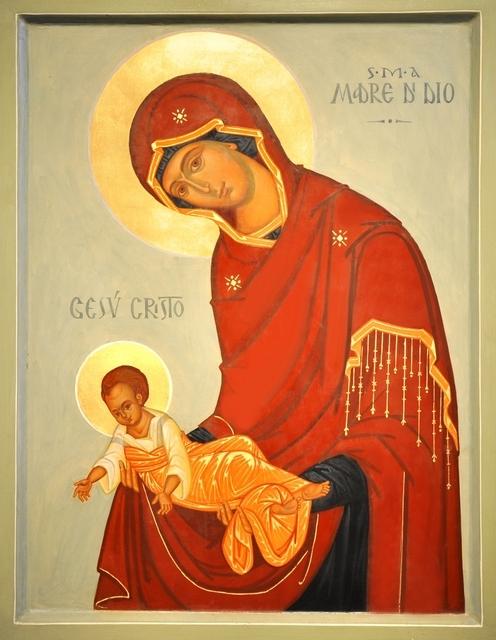
Madonna-con-Bambino

I santi sono uno specchio luminoso di questa fiducia incondizionata nell’amore del Padre e hanno seguito Gesù sempre e comunque, molte volte attraversando percorsi bui, nell’anima e nella vita concreta di tutti i giorni. Per me i santi sono una grande consolazione, perché nelle amarezze della vita mostrano che esse si possono superare umanamente o vivere secondo quanto il Signore ci chiede, con l’aiuto della grazia.

Ma vediamo che già da subito, la tentazione alla “scorciatoia”, all’alternativa alla “salita” nel buio, si affaccia nel cuore dell’uomo, perfino in chi era più vicino al Signore e ha poi dato tutto, la vita, per Lui. Nel Vangelo di oggi che segue la Prima Lettura sulla vocazione di Abramo, la liturgia propone il racconto della Trasfigurazione di Gesù. Camminano il Signore, Pietro, Giacomo e Giovanni, “su un alto monte”. Spesso, quando il Signore prepara qualcosa di speciale come in questo caso, il Vangelo racconta che ci si mette in cammino e in condizioni o circostanze generalmente ostili, difficili. La salita sul monte, come in questo caso; il contesto dei pastori – i reietti della società di allora – o i Magi ingannati da Erode, quando nasce Gesù… Una volta giunti a destinazione, Pietro propone di preparare tre capanne e rimanere lì, loro soli. “Lasciamoci tutto alle spalle, abbandoniamo il mondo con le sue amarezze”, praticamente a me sembra voglia dire Pietro. Forse, anche: “Godiamoci noi tre la compagnia del Signore”. Mi è capitato molte volte di sperimentare o incontrare persone che hanno vissuto questa tentazione. “Mollare tutto”, per dirla con un linguaggio più vicino a noi e forse più efficace; “tenerci stretta” la fede, nel nostro gruppo parrocchiale, nel nostro movimento, lontani dal mondo che “non conosce” o peggio ancora “rifiuta” il Signore…. La liturgia della Parola che saggiamente è stata “assemblata” con il Concilio ci dice con queste Letture che invece non bisogna fermarsi ma – come Abramo e parafrasando le parole di Gesù nel Vangelo di oggi, “alzarci e non avere paura” -, camminare, e dopo aver goduto della luce di Gesù, dobbiamo a nostra volta portarla nel mondo, per illuminare quei cammini bui che molte volte ci ritroviamo a percorrere nelle nostre vite. Non è una vocazione cristiana vivere in una capanna tra di noi, ma – direbbe ancora Papa Francesco – aprire le sue porte,  uscire per portare Gesù al mondo e lasciar entrare chi lo desidera.

Che questo tempo quaresimale, che ho sempre considerato un dono propizio nel cammino di fede, possa aiutarci ad alimentare sempre di più la piccola lampada della nostra fede e della nostra fiducia in Dio, che già non è stata delusa, , con la promessa della Resurrezione.