ConAltriOcchi blog – 以不同的眼光看世界-博客

"C'è un solo modo di vedere le cose finché qualcuno non ci mostra come guardare con altri occhi" – "There is only one way to see things, until someone shows us how to look at them with different eyes" (Picasso) – "人观察事物的方式只有一种,除非有人让我们学会怎样以不同的眼光看世界" (毕加索)


Leave a comment

Among the poorest of the poor in India

We are very pleased to post the first contribution to our blog by Fr. Bryan Lobo, a Jesuit from India, who is professor at the Pontifical Gregorian University of Rome. We are very grateful to Fr. Bryan for taking the time to share with us something about the amazing work that the Jesuit Fathers are doing among the poorest and most marginalised people in India. We are full of admiration for the dedication of Fr. Neelam Lopes, S.J., who leads such work, particularly supporting tribal communities to improve their living conditions through socio-economic, educational and health programmes. We do hope that from time to time both Fr. Bryan and Fr. Neelam will continue to inform us about the life and activities of the Church of this great country – India. From our side, we keep Fr. Neelam and the people he helps in our hearts and prayers and we will continue to provide our support to some of his activities.

Fr. Bryan Lobo, S.J

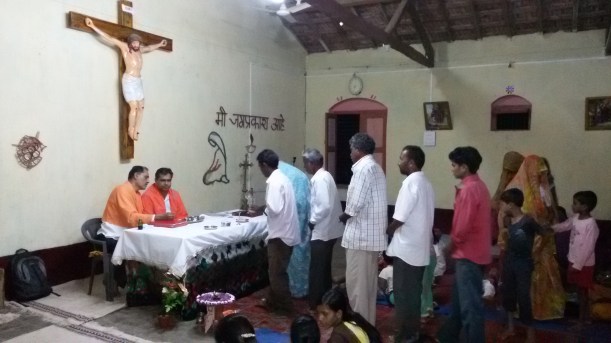
Last year, during my usual annual visit in India during the summer time, I had the joy to celebrate the liturgy with Fr. Neelam Lopes, S.J., Superior of the Missions in Shirpur (North Maharashtra, India). In the photos I am pleased to share I and Fr. Neelam are celebrating Mass in the Indian style for the tribals.

The people of this area belong to the Pawara tribe, a native tribe that is found in the western and central parts of Maharashtra. The Masses are normally celebrated, as seen in the photographs, in one of the halls constructed by the Catholic missionaries. The saffron colored shawls worn by the celebrants is significant to the Indian culture. The color saffron signifies renunciation. Saffron colored clothes are normally used by celibate Hindus (monks and nuns). The language used during the liturgy in these areas is Marathi, which is not the mother tongue of the Pawaras. Marathi is normally the language used during formal functions and in educational institutions. Most of the women seen in the photographs have covered their heads. It is part of the culture of the married Pawara women to cover their heads as a sign of respect.


image

     Fr. Neelam (left) and Fr. Bryan (right) celebrating the Eucharist during the Mass.  (c)Bryan Lobo/Francesco Pesce

image

Fr. Neelam (the first one, wearing a yellow scarf) and Fr. Bryan (sitting close to him wearing an orange scarf ) during the Mass. (c)Bryan Lobo/Francesco Pesce


Leave a comment

The Holy Spirit among the youth in Viet Nam

Sr. Mary Tran 

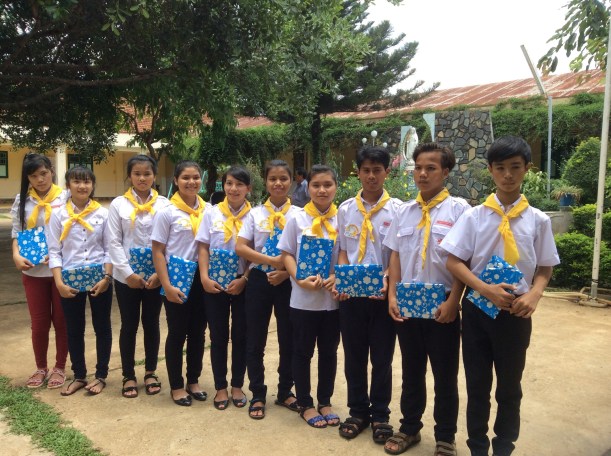
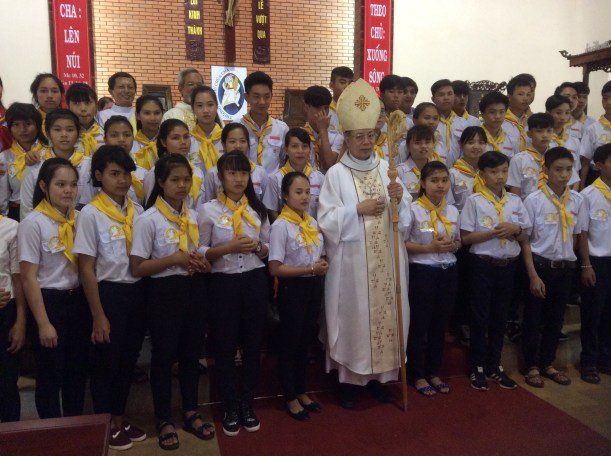
The Bishop of Kontum diocese, Msgr. Aloisio Nguyễn Hùng Vi, recently came to our parish to celebrate the Confirmation Sacrament for 142 chidren. Ten of them are from our boarding school and seven belong to ethnic minority groups. Their parents came the day before and stayed in our house so that they could attend the Mass because they are living very far away.

The pictures are taken in front of the grotto of the Blessed Mother Mary.

(C) Huong Tran, Francesco Pesce


(C) Huong Tran, Francesco Pesce

(C)Huong Tran, Francesco Pesce


Leave a comment

There can be no feasting without our sons and brothers

Fr. Francesco Pesce

God showers His blessings on the honest and the dishonest alike, He causes rain to pour on both the just and the unjust. However, He has a predilection for lost sheep, the stone cast aside, the prodigal son. This we must never forget, as Christians, who realise that we are ever in need of a new conversion, and as the shepherds of God’s people.

The Lord Jesus bears witness to the fatherhood of God, Who has sent His Son to rebuild a world according to the measurements of love, where even the lost sheep, the stone cast aside, the prodigal son are the object of the Father’s care, attention and mercy. A Father Who wants us all to be saved – as Pope Francis answered to a child in the recent book edited by Father Spadaro, SJ.

The Gospel for this Sunday of Lent recounts the well-known story of the prodigal son. Conversion does not mean becoming prodigal sons: it means overcoming the antithesis between the two sons, between virtue and sin, between those within and those without, and to overcome it by means of a synthesis, which is the work of love, in which those who belong to the world of virtue go beyond themselves, towards the bewilderment of the son who left his father and squandered his possessions. St. Paul explains the situation well in the Second Reading: God has forgiven us by reconciling us with Him. Therefore, God expects us – and we too should expect it of ourselves – to forgive others. St. Paul even speaks of a “ministry” that God has entrusted to each of us.

Why this idea of conversion? Basically for three reasons. The first is that each one of us belongs, at one and the same time, to the world of both the sons of the Gospel story. No-oneshould live under the illusion that he or she dwells only in the house of virtue. The second reason lies in the fact of being sons, which is not a merit, but a fact, and we Christians also believe that it is a free gift of God. And we are all sons, by virtue of the gift of His mercy.

The third reason that should prompt us to go out towards the prodigal son, to those who have done wrong, is simply because Jesus did so. It is not a question of (purely formal) obedience to God (often viewed as a master) that makes a Christian, but but our likeness to Jesus, Which our merciful Father sent to save us; the Beatitudes, in fact, and not the Commandments, are specifically Christian.

We must learn to understand and accept those who become lost. And we must bravely search within our “virtues” for their often self-righteous and sectarian characteristics, in order to enter into another measure of human brotherhood, based on reconciliation, like St. Paul, a great sinner who later became the Apostle of the Gentiles, encourages us to do.

It is not sufficient to go and eat with sinners and then return to our homes; it is not enough to use the Gospel as a sort of unusual manual of good manners: this is hypocrisy. We must remove all the obstacles on the path of reconciliation and to transform the Father’s house into everyone’s home, where no one is cast aside.

The prodigal son must convert to virtue, the eldest son to mercy. The Father expects each one of us to undertake the never-ending journey of this double conversion. There can be no feasting, in heaven and on earth, if even only one of our sons and brothers is missing.


Leave a comment

司铎庆祝复活,陪伴受苦之人

方济神父

在这两天f庆祝司铎慈悲禧年的活动中,司祭职是我们祈祷的核心。感恩经这样说:“就如你曾接受了你的义仆亚伯尔的祭品、我们的信仰之父亚巴郎的祭献,和你的大司祭默基瑟德所奉献给你的、圣洁的祭品,无玷的牺牲”。

希伯来书给我们说,耶稣是按照默基瑟德,而不是按照其它品位的司祭。假如司祭是属于某个品级的话,那将是一个悲剧,但在人类历史上有时候也会有这种品级的出现,就像武士和商人的品级。

创世纪描述了亚巴郎和默基瑟德的相遇。我觉得通过在山上的这种相遇,可以让我们对司祭职做出很多的反思。亚巴郎率兵解救他的侄子罗特,凯旋归来之后,默基瑟德款待了他,并为他献上饼和酒。亚巴郎在撒冷王面前俯伏朝拜。司铎应该是一个有威望、好客、懂得分享和给予的人。默基瑟德曾是撒冷——和平之城的君王。司铎也应该是一个和平的人。圣保禄说“基督是我们的和平”教宗方济各再次强调,教会不应该是一个“攻击性”团体,常处于一种备战的状态;更不应该是一个自认为被世界围困,而长期处于一种防御状态的团体。

然后,默基瑟德祝福亚巴郎说:“愿亚巴郎蒙受天地的主宰,至高者天主的降福!”。司铎是受祝福的人,这样的祝福会世世代代一直延续到一切人身上。天主的祝福是不可能被中断的,祂不容许罪恶、恐怖和罪恶的存在。这种祝福不但不会终止,相反,它会临到每一个人身上。此外,圣经还记载说:“愿至高天主受赞美,是祂把你的仇人交在你手里”。这样的仇人是被祝福所打败的。无论如何,司铎应该是一个会对话的人,有耐心的人,是一个懂得调停的人,以其祝福性的见证(明确并具有权威性),让敌对者屈服,使所有的争执化为乌有

亚巴郎拒绝接受战利品说:“我什么也不拿,连一根鞋带我也不拿”。司铎应该是一个贫穷的人,在任何意义下的贫穷,司铎尤其应生活在对天主的信赖中,一个天主的人,一名基督徒,即使在相反望德的环境下,仍应怀有希望

司铎也应该是一位圣洁的人,因为他们在亚巴郎和默基瑟德的山上受命举行弥撒圣祭。“谁吃我的肉,并喝我的血,必得永生,在末日,我且要叫他复活”。司铎——圣体圣事之人宣告的是复活,而非死亡。

最后,希伯来书这样说:“他自己也为弱点所纠缠,因此,他怎样为人民奉献赎罪祭,也当怎样为自己奉献”(希5,2-3)。司铎是一个能感受世界之苦的人,在这点上可以突显出他们使命的普遍性;世界的痛苦就是我们的痛苦。

让我们像拿着饼与酒的司铎一样接近世界的痛苦;天主就是饼,祂也是酒;我们做司铎的也应该成为饼与酒,作为他人的食量和饮料,好使所有的人都能够走到我们的救主——基督面前。

一位没有慈悲心肠的司铎,就像一张没有食物的餐桌,仅仅是一块石头而已。


Leave a comment

A blessed crisis

We are pleased to publish the afterword of the recent book by the Vatican journalist of Rai 1 Italian television channel Aldo Maria Valli, titled “C’era una volta la confessione” (Once was Confession), published by Ancora. It is a reflection on the Sacrament of Confession at the time of Pope Francis and has also been published in the March 10 edition of L’Osservatore Romano, at page 7 .  This is our translation from the  original in Italian Language. We remain at disposal for promptly removing this post if it is not appreciated by the right owners.

Fr. Francesco Pesce

I belong to a generation that was educated to fear God, rather than to love him; during seminary, a new sense of duty was required, in the face of which it proved hard to remain free and joyful. I can still see this fear and twisted sense of duty today in many people who approach the Sacrament of Confession. Fear of God, fear of themselves, fear of others and their judgement. Confession as an obligation, not as a desired meeting with our Father, who is always willing to forgive us. I must confess that I was surprised to hear Pope Francis, in preparation for the Jubilee, speak of the «missionaries of mercy». I asked myself: but aren’t priests by definition missionaries of mercy? Isn’t forgiveness a very hallmark, so to speak, of the priest? Then I remembered that I had seen with my own eyes, in some confessionals, the Book of Canon Law, ready for use, like in a law court, and I also remembered the accounts of several penitents, injured by some priests who had been very harsh. And this helped me understand Francis’ idea. My experience as a confessor, in fact, has taught me that the advent of Pope Francis has blown away the old sense of fear and duty, and replaced it with the desire to meet a merciful Father. Not only have confessions increased exponentially, but the quality has improved too. Nowadays, many people enter the confessional holding a copy of the Gospels, having adopted his suggestion to read at least one passage every day. And so they confess themselves based on what they read. This fills me with a great joy. It is a true miracle worked by this man, Francis, sent to us by God. I can see that, thanks to God, people do not feel more sinful (I think that there are already too many people oppressed and humiliated by their sins), they now feel that their Father is more merciful. I wish to add that I see rather clearly, if I may say so, that when a person feels welcomed, respected, encouraged, then he or she can better understand his or her sins and ask for forgiveness. Indeed, he or she can understand that his or her sin, in a certain sense, has already been forgiven, that he or she is inside the confessional to accept the forgiveness that has already been granted, because God is love, in the brief, yet sublime, words of John the Evangelist. This is also why I believe that to speak of a crisis of the sacrament of confession is a contradiction in terms; it is the way in which the priestly ministry is practised, if anything, that is undergoing a crisis. Because this priesthood is confined to the sacristies, rather than lived out in the streets, it is a priesthood that prefers the smell of incense, and money, rather than that of the flock of sheep. Therefore, I see it as a “blessing crisis”. My experience has taught me that men and women come to confession in equal numbers. But two things do strike me, although I find them hardly surprising. The first is that the confessions of those who appear closest to the Church, who ways attend, are more predictable, matter-of-fact, and soulless; sometimes they even expect a good punishment rather than forgiveness. They are also those who don’t very much like Pope Francis, precisely because, they say, he’s «a communist, a pauperist, too predictable», plus other nonsense disseminated by the 21st century crusaders and by some very godless and hardly devout atheists.

I would like to give you an example: I have been a priest for sixteen years and I still have to struggle enormously to explain to catechists (who are otherwise saintly persons) that teaching children «Dear God, I repent and regret my sins, because by sinning I have deserved your punishment» is not the best thing. This should at least be better explained and replaced with other biblical acts of contrition. I also wish to mention those who find it absolutely necessary to confess themselves on a given day, otherwise they feel they have broken their devotional service and have to start all over again? Is this not an obsession rather than devotion?

The other thing that strikes me are the confessions of the members of certain ecclesial movements, and of one in particular, which is also quite widespread. These confessions all seem to be the same, as if part of a stock repertoire, totally lacking the sense of thanksgiving for the good there is out there. To these I always say: «Excuse me, but something nice and good must have happened to you since you last confessed, or is everything just sin?».

I would like to conclude by saying that I find it disheartening to see confession hours put up in churches. As much as I understand the need for planning and organisation, but the church is not a post office. My experience has taught me (I work as a parish priest in the centre of Rome) that priests should be available primarily at lunchtime and in the evenings, after the evening Mass, to meet the needs of working people. Of course, this can only be done if we keep our church doors wide open, like God’s heart, who we call upon as «Our Father, who is in heaven», not «Our Judge and Master, who lives in the confessionals».

Leave a comment

教会的另一半

于方済神父和罗木兰

过去几周内不断地有关于女人在教会中之地位为主题的消息。说实话(至少在意大利),它不是一个热烈谈论的题材,除了几个有成果外,有时有点幼稚,有些报章报道后没有引起共鸣。方济各教宗这几天在罗马国际总会长联合会的会议上讲了话,他回答一位修女的问题,说他愿意组织一个委员会去研究女执事的问题。正好几天前在德国明斯特举行的会议中谈论过这主题,这会议是由德国天主教妇女会、德国妇女联合会及其他平信徒团体所发起的。在最后一次个家庭宗教会议中,保祿安德肋·杜罗榭蒙席-魁北克天主教加蒂諾總教區主教,曾任加拿大天主教主教团团长-也要求提出了准许女人当执事的要求。根据传统,它是指向「女执事不是为成为司铎,而是为替教会服务」。在九十年代,卡洛玛利亚·马蒂尼枢机主教曾示意有女性执事的可能性,提出要进一步研究初期教会女执事的性质和惯例。1999年天主教文明杂志上的一篇文章对谈论该问题的主要路线进行了分析,重点在于把以服务为目的的女执事和为晋升铎品的第一步男执事区分开来,天主教会是拒绝女性当任的。几个星期之前伯色修道院恩佐·比安奇院长的一番话引起了争论,他支持女性也能在弥撒中讲道。

但是女士们,尤其是那些女天主教信徒,对这些跟她们有关的事情,有什么想法呢?她们怎么看待她们的角色、她们在教会中的贡献呢?我们似乎看到这些女性在教会的第一线忙碌,却很少谈论这个题目,她们的工作在替她们的话。她们在堂区、教育机构、慈善机构、医院和社会服务中心以及福传活动中的贡献简直是异常杰出。女人在教会中已经有了角色:她们协同神父们管理堂区的许多活动,站在传教工作的前线,领导全体的修会(包括「国际」的那些修会),教授圣经和神学…到时候应该就是这些女人来表达她们对自己在教会中角色的看法了。避免利用软弱且佯装老派女权主义的论点,它们不但不能有助于代表她们,而且也无利于重生妇女在教会中角色的整体价值-我们确认,为了全体天主子民的益处,包括教宗和主教们在内,是绝对必要的。

by Marco Rupnik

让我们一步步地想一想。旧约圣经一开始就讲述男人和女人和谐的并以同样的尊严一起被创造。可是一些有关原罪的曲解还没完全克服促成了一个「负面」的女人形像,把她弃置在一个隶属于男人、在社会上少有空间的角色中。

在福音里面耶稣做了一个真正的革命:他保护一位淫妇,免遭乱石砸死;他停下来跟一位撒玛利亚妇女谈话-当时撒玛利亚人被视为一种「邪教」教徒;在跟随他的人和他最亲爱的朋友们之间有许多女人…更不用提圣母玛利亚天主之母的角色,和复活了的耶稣首先显现给两位女人的事实了,她们因而成为复活的首两位宣报者。不过保禄宗徒,即便已经有他的平等的世界观-「不再分犹太人或希腊人,奴隶或自由人,男人或女人,因为你们众人在基督耶稣内已成了一个。」

(迦3,28)-他又加以改编:「但我愿意你们知道:男人的头是基督,而女人的头是男人,基督的头却是天主…。男人当然不该蒙头,因为他是天主的肖像和光荣,而女人却是男人的光荣…。原来不是男人出于女人,而是女人出于男人」。却他又承认:「然而在主内,女不可无男,男也不可无女,因为就如女人是出于男人,同样男人也是藉女人而生;但一切都出于天主。」。当然保禄所受的严格的法利塞教育和他跟他眼中习俗非常「放荡」的「外邦」民族的接触,深深地影响了他对女人的立场,因而影响到了妇女在教会中的地位。但是,圣经学者马力内拉·佩罗尼(Marinella Perroni)写的一篇文章,讲重读保禄疑是厌恶女人性者,并解释万民的宗徒赞赏和利用女人作为使徒,却是蛮有趣的(http://www.stpauls.it/vita/0901vp85.htm)。

直到如今,在教会延续千年的历史上,有许多女人已经知道透过圣化、见证和她们生活上的勇气显示自己了。她们的根源、圣召和路程时常大不相同。试想在封爵争斗时代曾帮助教宗的贵族马蒂尔德•加诺撒;圣奥思定的神秘母亲圣莫尼加;本笃隐修院修女兼多产作家希尔德加德·冯·宾根;非常亲近圣方济各的亚西西圣女加辣;1970年教宗保禄六世宣布为首两位女性教会圣师的亚维拉的德兰和西耶纳的加大利纳;还有许多其他女士,直到现代的里修的圣德兰、圣女艾蒂特·史坦茵、圣女西蒙娜·韦伊、圣妇贾娜•贝雷塔•磨拉(Gianna Beretta Molla)和今年九月份要被方济各教宗封圣的德肋萨修女。

最近几位教宗显示了他们明白女人在教会中角色的重要性,并在对「女性天赋」进行完美的教会评价上作出有意义的迈进。但是在这个问题上,像在另一些问题上一样,教会花费了一些时间。今天问题存在于部分的教会制度僵化成坚硬和保守的机构,常象是个权力生活的场所,完全不管为了教会的好处要如何更好的将女性网罗在内的这个问题。或是更糟糕,该机构受着「轻视女性」的折磨,就如同我们社会的一部分,也是这样。

但也是真的,或许很多情况看起来跟事实不一样,因为我们看的不远,也不用更为开阔和复杂的视野去分析问题。

在欧洲许多教堂圣召大量减少、通常也是最有信仰危机的地方,女性被委以更多负有责任的角色。例如她们协助神父们-正是因为神父的缺乏得管理分散在领土上的好几个堂区-去开堂和「管理」教堂、领导祈祷,甚至送圣体。这也发生在非欧洲国家内,但却是为了不同的理由-人数庞大和土地辽阔,领土常没连接好。直到几年前,在意大利,特别是罗马,尤其是教宗在堂口主持弥撒的时候,看不到女童辅祭,这在其他国家,特别是在北欧,很久以来是常规。有很多女性,也包括女平信徒,在本地教会的许多机构中工作,她们通过世界各地区的信友协会来协助许多的修会团体…

当然,若要提出几个问题是可以理解的。例如为什么大修会的女会长不能参与枢密会议并选举教宗,或者至少能参与枢密会议之前的会议?为什么一些有资格的女士不能属于委员会的成员来建议教宗有关教廷的改革,并不一定要当枢机主教呢?这个「女枢机」的提议,方济各教宗好像没有思考,因为他在其中发觉到了一种教权主义:「女性应该被提升价值,不是要被神职化」,而为此作了评论。

 对这些问题和疑问我们的回答是需要看得远,正是要回顾圣神降临和大公会议时期的教会。宗徒大事录所描写的初期教会给我们显示要让圣神领导我们。圣神的临在为我们每个人是生命。部份教会人士用狭窄的、等级的、过时的措辞来看自己,没有让赋予生命的圣神光照自己。现在和未来都等待有创意的回应,使男人和女人,这天主的不同但彼此互补的形象,为社会和全世界服务。如果我们按照圣神的启示说话,我们讲话的方式应该是让我们的话同时是男性和女性。我们需要一个教会,使其内女人的敏感和智慧,也在一些建议、判定和治理的过程中提供完滿服务。但我们不能落入教权主义、追求名利主义或者-像教宗最近一再告诫的-教会女权主义内。反之我们需要落实大公会议并在平信徒广泛参与的教会生活内面对这个问题。从神学和圣经学问题的陶成说起,至少在意大利,有关的课程和组织主要还是针对神父和修士们的、难以促使平信徒的参与。再说神父修士们在教会服务的范畴。难道他们要领导所有的教会部门吗?不能多让一点位置给天主教大学的平信徒教师吗?例如,把一些办公室托付给平信徒,让更多的平信徒教书,好使神父们(因圣召危机越来越少)从事牧民和施行圣事,不是合适吗?确实,有许多平信徒协助那些领导教会部门和办公室的人,包括咨讯师专家在内,不少资讯师是平信徒,包括女性在内。所以教「宗教课」、甚至圣经和神学课程的女性越来越多了,任职天主教大学学院和科系主任的女性也一样,这很可能在许多欧洲国家不例外,或许在很多非欧国家也不例外。而另一方面,当在不同的社会和文化还有先进的体系中女性感到难以在「传统男性」的角色中显示自己的权威时,我们需要在一些教会范畴内查明某些性质比较保守的行为。此外有一些个别教会,因文化问题,让女性更多地参与教会工作的题目,从妇女本身开始,根本不觉得是优先的,而女性的角色、男女机会平等的问题,都大大地超过教会的范畴。

我们不要陷入这诱惑,想教会是个常采用西方标准的统一机构,并从他特有的历史-文化背景中断章取义。此外我们不是要追求角色的平等,而是要追求在教会内最大化的提高平信徒和女性的价值,就如同提高教会内所有人的价值一样。我们清楚意识到「基督的人类学」,讲的是天主对男性和女性的观点,不使用我们「一般」社会学、心理学、历史上的标准…

 也许我们可以进行的工作是「从底层」增加教会团体的参与。这是为了让教会和教宗得到所有平信徒贡献的好处,他们中有的接受了良好的神学培育并致力于教会的各个现实中,在牧灵生活的各层面站在第一线。但这不光是针对平信徒(和女性),也针对神父和宗教人士。为此我们认为必须看得远,用更宽广的视野,来思考问题,胜过冒着使用不符合教会圣事的施行,带有俗世味道的讨伐词语来介绍问题的危险。

「五旬节日一到,众人都聚集一处。」(宗2,1)几天前教会庆祝了圣神降临节。在濯足和建定圣体圣事的最后晚餐厅中大家聚在一起。当然恐惧笼罩着他们,但都聚在了一起。他们在五旬节聚在一起的时候,圣神闯入并更新所有的一切。教会应该常从聚在一起让圣神领导它而重新开始,因为只有这样才能使复活的基督活生生的临在。我们不要再背叛复活的基督,且不要失落圣神的气息。将是圣神的果实而不是有意的宣报成为我们大家-男人女人、平信徒、辅祭儿童和宗教人员-为教会所做的见证。


Leave a comment

Porte aperte in parrocchia!

Don Francesco Pesce

Gia la mia prima Messa nel lontano 1999 l’ho voluta simbolicamente iniziare spalancando il portone della chiesa. Poi, dal 2006, anno in cui sono diventato parroco della mia precedente parrocchia romana – Santa Melania Juniore – e poi ora come parroco di Santa Maria ai Monti, vicino al Colosseo , ho subito aperto la chiesa tutto  il giorno fino alle 22.00. Ora che sono al centro di Roma il venerdi e il sabato la tengo aperta fino alle 24.00 per intercettare la movida.

Mi sono sentito supportato e rincuorato quando anche Papa Francesco ha iniziato a parlare di “Chiesa in uscita”, invitando i preti anche a tenere aperte le porte delle parrocchie. Chiesa aperta per me significa aperta, cioè si deve capire con chiarezza che è aperta. Quindi via subito le retroporte di legno che la fanno sembrare chiusa, e mettere vetrate che lasciano vedere l’interno. Noto però che appena possibile e non fa piú molto freddo è utile spalancare anche la vetrata, perché la gente (soprattutto chi non ha familiaritá con la parrocchia) é piú invogliata ad entrare. Inoltre, fa bene anche a noi parrocchiani sentire il rumore della città e percepire la massima comunione tra dentro e fuori.

Ho poi sperimentato che e’ molto importante  osservare alcuni accorgimenti per l’illuminazione serale: illuminare molto bene l’ingresso e creare uno spazio privilegiato di luce nella zona del tabernacolo e della immagine mariana o del santo principale nella chiesa. Il “controllo” lo fanno le persone stesse che vengono a pregare o perfino chi passa davanti o dentro la chiesa, perché nel rione Monti in particolare c’é un grande senso di comunitá, quindi anche la chiesa é sentita un pó come la casa di tutti. E’ anche utile in questo senso avere un buon rapporto con i negozianti del quartiere che ogni tanto fanno una passeggiata in chiesa. “Fate buona guardia alla vostra chiesa” – diceva Mazzolari.

E infatti é il  popolo di Dio  a farsi carico della custodia della  chiesa. Dopo poco tempo si crea un movimento di persone che rende assolutamente sicura la chiesa. A poco a poco poi bisogna  qualificare l’apertura continuata: ad esempio celebrando la Messa all’ora di pranzo (per favorire i lavoratori della zona) e garantendo la presenza di un sacerdote per le confessioni e i colloqui spirituali  fino alla chiusura, sempre per aiutare chi lavora fino a tardi o anche gli studenti universitari.

A volte qualche “parrocchiano storico”, o le pie donne di cui parlano gli Atti degli Apostoli, protestano un po’ paventando chissà quali pericoli. Bisogna da una parte tranquillizzarli, dall’altra lasciar cadere la cosa, soprattutto all’inizio, quando si preoccupano che è pericoloso, che i barboni non hanno rispetto per nulla, ecc. Dopo poco, vedendo che non succede nulla di male, ma che invece si vedono i frutti, passano tutte le paure.. Non ho mai visto crollare una chiesa per i barboni. Anzi spesso queste persone sono ottimi vigilanti e addirittura puliscono il sagrato più volte al giorno.

Nel fine settimana l’apertura è prolungata fin piú o meno la mezzanotte per intercettare la movida che qui da noi si lascia intercettare volentieri.


Leave a comment

三位一体的奥理晓谕我们多元性源于天主

于方济神父

在由基督所聚集的人类大家庭内, 至圣天主圣三的肖像和模样被重塑,由此奥迹中涌流出每一真正的爱。 (教宗方济各, Amoris Laetitia, 71)

当论及天主圣三的奥迹时,进行纯理性探究的冒险是无益的,而要注重的是爱的具体实践。爱就是连系父与子的那一位,祂就是圣神,亦即天主圣三。

“圣神要光荣我,因为他要把由我所领受的,传告给你们”。(若 16,14)耶稣的生活,及其那跨越任何界线、打破一切藩篱的见证,为我们每个人都是应遵循的典范,及大家一起要走的路。耶稣透过圣神赐予我们各种恩宠,一切皆归于祂,在祂的自我给予及其与我们的共融中,彰显着祂的荣耀与喜悦。

“凡父所有的一切,都是我的”。(若 16,14a)父的光荣即是子的光荣,如果我们日复一日地回应我们基督徒的圣召,纯正的给予也将会是我们的喜乐。

活于无偿,见证美善,逃避不仅邪恶,还有普遍的平庸。总之,要活于福音真福,这一切都能彰显并使我们参与天主的荣耀。

天主圣三的奥迹晓谕我们的另一点即是多元化和多样化,它们原本属于天主,故此,我们应以尊重和重视的态度去对待。

在生活及任何环境中、 在这人们的心灵充满物欲的社会中,正如教宗保禄六世所言,我们应持有“无比的热忱”, 在圣神的引导下,要使我们的福音宣讲、我们的牧灵,成为切实而有效的。有时,世界与我们是那么不同,它如此多元复杂,但天主却已爱了这世界且已把圣言的种子播于其中了。

就如福音提醒我们的,天主还有许多事要告诉我们,但我们已知道了,天主要告诉我们的是爱与和好的话语。如果我们渴望活在天主的光荣中,就没有任何障碍、任何困难、任何人间的力量能阻止我们亲近天主。


Leave a comment

Il sacerdote celebra la resurrezione e accompagna il dolore del mondo

Don Francesco Pesce

Le celebrazioni per il Giubileo dei sacerdoti presiedute oggi da Papa Francesco

In questi due giorni in cui si celebra il giubileo dei sacerdoti, il sacerdozio è   al centro della nostra preghiera. Nel canone romano  cosí leggiamo: “Tu che hai voluto accettare i doni di Abele il giusto, il sacrificio di Abramo nostro Padre nella fede, l’oblazione pura e santa di Melchisedek tuo sommo sacerdote”.

Ci dice poi la lettera agli Ebrei che Gesù è sacerdote secondo Melchisedek, non secondo qualche casta. Sarebbe tragico se il sacerdozio appartenesse a una casta, e a volte nella storia è avvenuto, come per le caste dei guerrieri e dei mercanti.

Nel libro della Genesi si descrive l’incontro tra Abramo e Melchisedek. Credo che da questo incontro sul monte possiamo trarre molti spunti di  riflessione sul sacerdozio. Abramo era appena tornato vincitore da in epica battaglia per liberare il nipote Lot. Melchisedek lo accoglie e gli offre pane e vino. Abramo si inchina a questo Re. Il sacerdote deve essere un uomo autorevole, ospitale, che sa condividere e donare. Melchisedek era re di Gerusalemme, città   della pace. Il sacerdote deve essere anche un uomo di pace. “Cristo nostra  pace“, dirà  San Paolo. Papa Francesco ha dato nuovamente enfasi a una Chiesa non “aggressiva” sempre in guerra con tutti, peggio ancora in perenne stato di difesa perché assediata dal mondo circostante.

Poi Melchisedek benedice Abramo : “Sia benedetto Abramo dal Dio altissimo creatore del cielo e della terra”. Ecco, il sacerdote é l’uomo della benedizione e questa benedizione  continua per tutte le genti e per tutti i tempi. Non e’ possibile interrompere la benedizione di Dio, non lo può fare  il male, il terrorismo, i nostri peccati. Non solo la benedizione non può  essere interrotta ma raggiunge ogni uomo. Inoltre dice ancora la Scrittura: “benedetto il Dio Altissimo che ti ha messo in mano i tuoi nemici”.I nemici sono sconfitti dalla nostra benedizione.A maggior ragione il sacerdote deve essere un uomo di dialogo, di pazienza, di mediazione, che con la sua testimonianza benedicente (ma limpida e autorevole) disarma gli aggressori e rende vana ogni contesa.

Poi Abramo rinuncia al bottino di guerra : “Non prenderò  nulla neanche un legaccio dei calzari”. Il sacerdote deve essere un uomo povero, povero in ogni senso, in particolare vivendo  della fiducia in Dio, un uomo, un cristiano, che spera contro ogni speranza.

Ancora  il sacerdote deve essere un uomo puro che celebra l’eucarestia iniziata sul monte di Abramo e Melchisedek. “Chi mangia il mio corpo e beve il mio sangue ha la vita eterna ed io lo resusciterò  nell’ultimo giorno”. Sacerdote uomo della eucarestia che annuncia la risurrezione non la morte.

Infine  dirà  la Lettera agli Ebrei : “Si e’ rivestito di debolezza e proprio per questo deve offrire sacrifici per se stesso e per tutto il popolo”. Il sacerdote e’ un uomo che entra nel dolore del mondo e qui sta la vera universalità  del suo ministero;  e’ il nostro dolore, quello del mondo.

Accostiamoci al dolore del mondo come sacerdoti che hanno  in mano  il pane e il vino; Dio e’ il pane e Dio e’ il vino;  anche noi sacerdoti dobbiamo essere pane e vino per gli altri e dobbiamo essere mangiati perché  tutti gli uomini possano arrivare a Cristo nostro Salvatore.

Una tavola senza pane è una pietra, come un cuore sacerdotale senza misericordia .


Leave a comment

为什么注视升天的耶稣?

耶稣升天节的反思

罗木兰

弥撒读经中宗徒大事录所描述耶稣升天的那一幕留给我的印象非常深刻。我觉得那是一个充满生气的时刻,仿佛自己就像站在耶稣的门徒当中一样,虽然耶稣要离他们而去了,但他们并没有意识到这是最后的离别。那是一个庄严而神秘的时刻,或许会让宗徒们觉得有点不安、害怕和疑惑。再往后,他们也可能会意识到耶稣不可能很快就回来,现在,“一切”都交给了他们,耶稣不再以有形的方式临在于他们当中,他们需要承担起宣讲和见证福音的使命…

加里肋亚人,你们为什么站着望天呢?这句话一直在影响着我,我觉得我听到的是一个庄重而有威能的声音。一方面我在想,为什么这些“穿白衣的人”,这些天使,会对如此明显的事提出这样的问题呢?为了这位老师,门徒们舍弃了一切,将自己的生命奉献出来,并把希望完全寄托在祂身上;就是这位老师,在几个星期之前他们曾以为祂像一个罪犯那样死去,但后来他们又看见祂复活了。如此敬爱的老师永远离开了,祂与门徒们分别了,而且也没有留下太多的解释。唯一能够让人期待的是:可以用惊讶的目光护送祂离去,直到完全消失在他们的视线中。那种“喜乐的结局”对我的感触一直都很深:你们看见祂怎样升了天,也要怎样降来。这句话留给我的是一种“空虚”的印象,那是一种存在上的空缺,天主临在的短缺,而这种临在是人们经常会经验到的。主啊!你在哪里?在战争中,在天灾中,在孩童和无辜者的痛苦中,在我们的生活处于单调乏味、或是被邪恶和个人主义思想所左右时,在对生命赋予我们的众多美好事物缺乏激情和感恩之心时都有你的临在。天主,你在哪里?就像一首歌的歌词中所说的:“你在天上的某个角落里,从那里注视着我们”。

通过反思今天路加的叙述,我似乎明白更多的道理。就像圣咏作者所说的,在天主的心里,在救恩历史中,在复活的事件上,“千年好像是刚过去的昨天”,“又好像夜里的一更时间”。信仰的经验,即用信德的眼光来看所发生的事(天使,升天的耶稣),就是厄玛努尔 —“天主与我们同在”的经验;是天天与我们在一起、象征我们得救的圣体圣事的经验;是复活的经验,这是我们正在参与的经验。我觉得这就是天使们想要对我们说的。不要呆呆地、无助地站在那里看,好像一切都结束了似的如果你们真的明白耶稣是主,祂复活了,并为我们战胜了死亡的道理,你们就能领悟,而且也应该明白,这只是一个结局的开始。所以我说,或许门徒们日后才能明白了一些道理,为此,天使们向那些见证复活的人提出一个无法预料的问题。慢慢地,在天主圣神的帮助下,门徒们和我们才明白两千年以前就应该明白的道理,但在耶稣升天后,祂不会以有形的方式亲临我们身边,所以有时候我们就会忘了他的临在。耶稣升天后派遣圣神降临也不是出于偶然。正因为祂知道当时的门徒(就像今天的门徒一样)不能明白所有的真理,不懂得在对未来之事的期待中生活,那些事已经开始兑现,在末日我们会圆满的生活出来。

或许天使们还愿意对我们说:你们看着天,向上看,让天主启发并带领你们,生活在这个世界上,你们一定要卷起袖子,双脚站稳。注视天主,在天与地之间保持惊醒,在弟兄中你们是见证者,在天国的幽径上不要迷失了自己。在与门徒告别之前耶稣所说的许多话中,我们记得“你们要为我作证”,也就是说,你们要完成我的意愿,在世界各地,透过具体生活宣讲福音。在信德的眼中(天使)这些都很清晰,但为我们并非总是这么清晰。

教宗方济各刚刚在喜乐经的祈祷中提醒我们:“如果我们仰望天上,我们的希望将是坚定的”,“耶稣不留下我们做孤儿”,“祂与你们在一起,祂还活着”。教宗方济各提出与信德的具体见证密不可分的是想到“复活之主在我们中的临在,是祂借着天主圣神的恩宠不断开启我们的思想和心灵,为能在我们所处的这个执拗的境遇中宣扬祂的爱和祂的仁慈”。

主啊,求你赐给我们恩宠,让我们懂得在醒悟和准备中期待你,并教给我们如何做尘世与高天之间的桥梁,借着你的圣体以及圣神的恩宠,你“天天与我们在一起,直到今世的终结”。